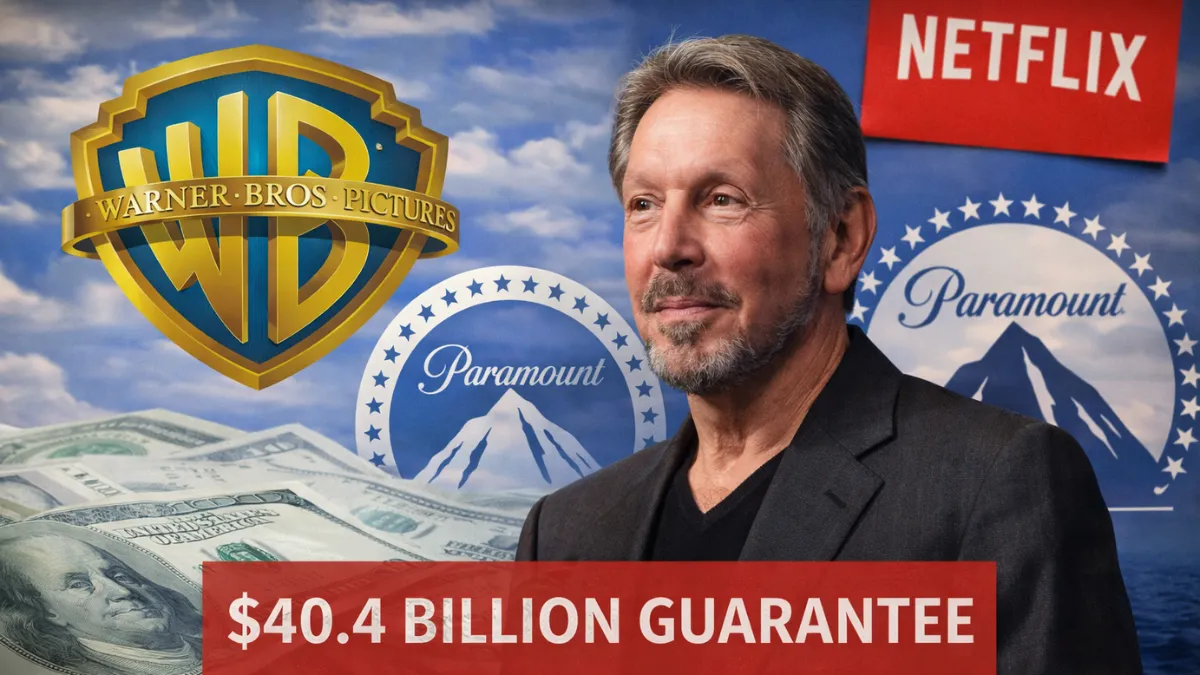
Oracle co-founder Larry Ellison has stepped in with a personal $40.4 billion guarantee to bolster Paramount Skydance’s bid involving Warner Bros Discovery, escalating a high-stakes battle with Netflix over some of Hollywood’s most valuable film and television assets.
Why Ellison stepped in
Ellison’s intervention marks a dramatic escalation in Paramount Skydance’s efforts to counter Warner Bros Discovery’s consideration of selling major studio assets to Netflix. By personally guaranteeing the financing, Ellison removes a key uncertainty around funding at a critical moment in the negotiations.
The move signals confidence in the long-term value of traditional studio intellectual property, even as streaming platforms continue to reshape the industry.
What’s at stake for Warner Bros Discovery
Warner Bros Discovery has been under pressure to reduce debt and unlock shareholder value, prompting internal discussions about divesting parts of its studio and content portfolio. Netflix’s interest reportedly centers on acquiring premium film and television libraries that could strengthen its global streaming dominance.
Paramount’s bid, backed by Skydance and now Ellison personally, offers an alternative that would keep those assets within the legacy studio ecosystem.
Netflix vs Paramount: a clash of models
The contest highlights two competing visions for Hollywood’s future. Netflix, flush with cash and global scale, sees studio assets as fuel for subscriber growth. Paramount and Skydance argue that studios still hold strategic value beyond pure streaming economics, especially when paired with theatrical releases and franchises.
Ellison’s involvement adds financial firepower that could narrow the gap between the traditional studio model and Netflix’s scale advantage.
Regulatory risks loom
Any deal involving Warner Bros Discovery assets is likely to face close scrutiny from US and international regulators. A sale to Netflix could raise antitrust concerns about market concentration in streaming, while a Paramount-led transaction would also be examined for its impact on competition in film and television production.
Analysts say regulatory uncertainty could prove decisive in determining which bidder ultimately prevails.