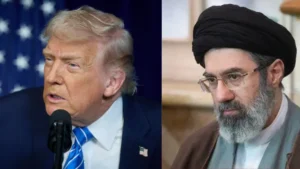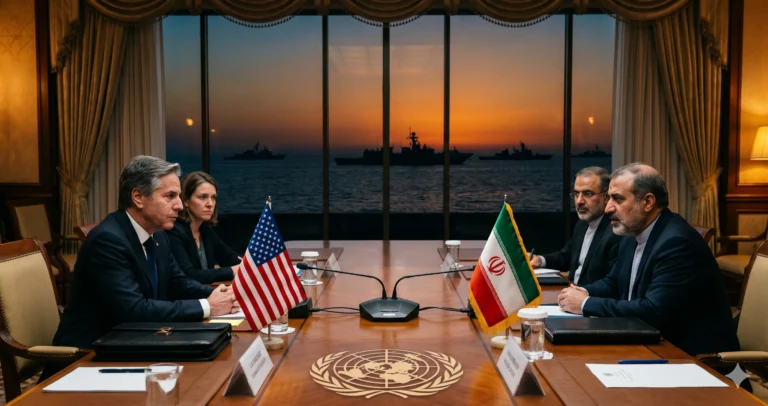
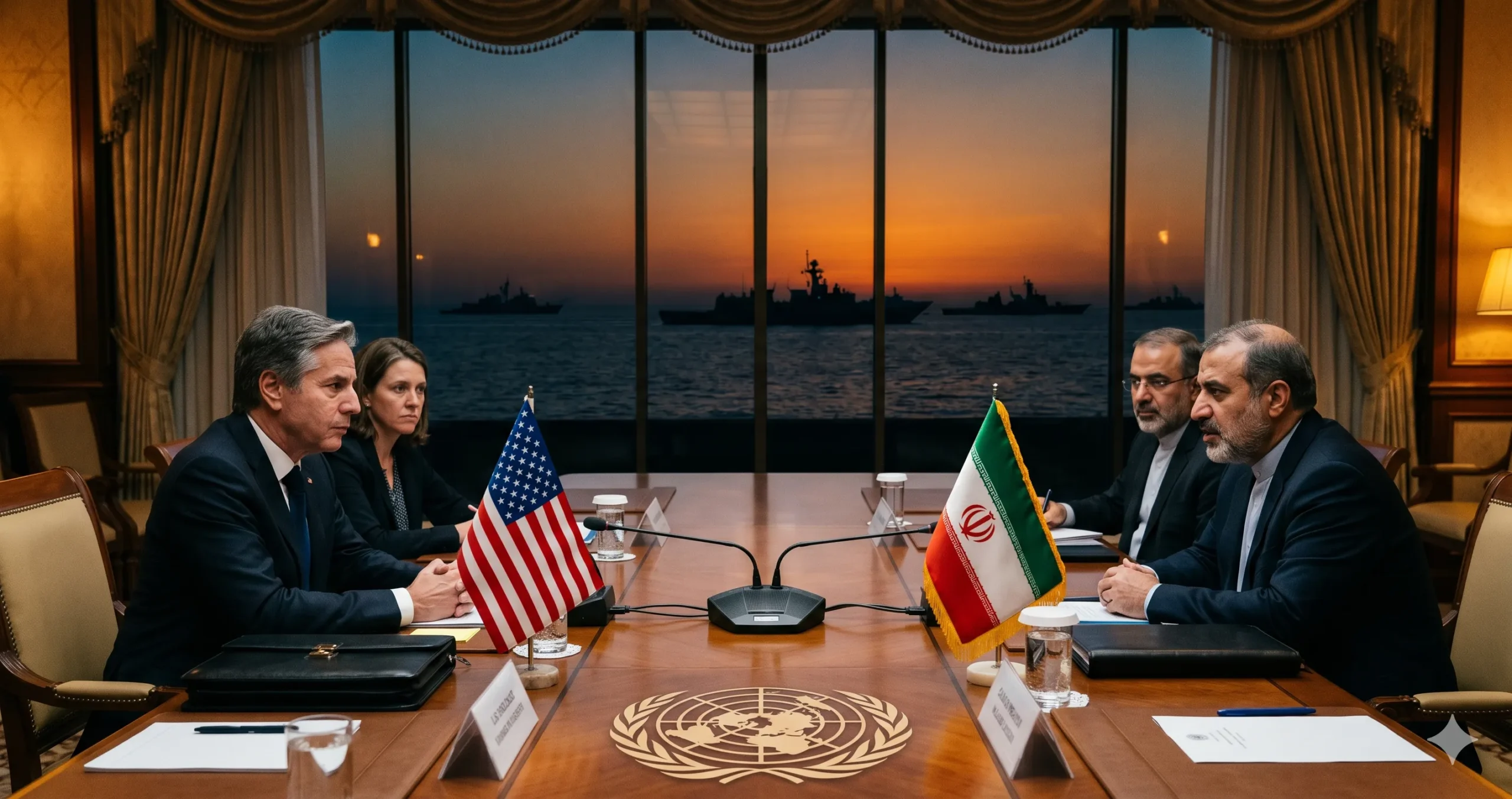
WASHINGTON / TEHRAN — After weeks of escalating missile exchanges, drone strikes on Gulf airports, and a crippling naval blockade that has rattled global energy markets, the United States and Iran stood at a pivotal and deeply uncertain crossroads this week — as President Donald Trump declared the conflict “over” and Tehran flatly refused to confirm it.
The dramatic sequence of events, unfolding from the ruins of Kuwait International Airport to the back-channel corridors of Qatari diplomacy, has left analysts, world leaders, and ordinary Iranians struggling to distinguish between a genuine ceasefire and another episode of high-stakes brinkmanship.
From Kuwait to the Oval Office: A Week of Whiplash
The most recent chapter of the conflict reached a grim milestone on June 4, when Iranian drones struck Kuwait International Airport, killing one person — later identified as an Indian national — and injuring more than 60 others. The attack caused widespread chaos inside the terminal and damaged several diplomatic missions, prompting Kuwait’s foreign ministry to expel two Iranian diplomats within 24 hours and summon Iran’s chargé d’affaires.
Iran’s Islamic Revolutionary Guard Corps (IRGC) initially denied targeting the airport, claiming the destruction was caused by a misfired American missile interceptor. U.S. Central Command (Centcom) rejected that account as false, stating plainly that Iran struck the airport in what it called a “deliberate, calculated and unjustified attack.” The IRGC had framed its broader Gulf operations as retaliation for earlier U.S. strikes on an Iranian oil tanker and Qeshm Island, a military installation in the Strait of Hormuz.
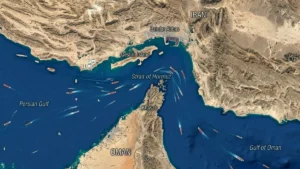
The U.S. responded with what it described as “self-defence” strikes on Iranian military infrastructure, shooting down or intercepting Iranian missiles fired at Kuwait and Bahrain. Centcom confirmed it had also struck and “disabled” a Botswana-flagged oil tanker heading toward Iran as part of the ongoing naval blockade of the Strait of Hormuz — a maritime chokepoint through which roughly a fifth of the world’s oil supply typically passes. The blockade has been in effect since April 13.
Trump’s Sudden Pivot: “We Ended the War”
Then, with the same abruptness that has characterised much of his foreign policy, President Trump reversed course entirely. On June 11, hours after publicly threatening to strike Kharg Island — the hub responsible for approximately 90 percent of Iran’s crude oil exports — Trump took to Truth Social to announce that he had cancelled the planned strikes because “discussions with the Islamic Republic of Iran have been brought to the highest level of Iranian leadership and approved.”
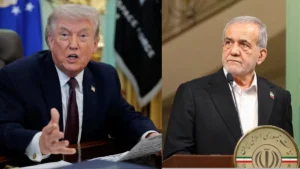
“I don’t know if you heard, but we ended the war with Iran today,” Trump told supporters on a campaign telerally. “They have agreed never to have a nuclear weapon — something that we insisted on. That was 95 percent of it.”
From the Oval Office, Trump described a “very strong memorandum of understanding” — characterising it as “a little conceptual” — and suggested that Vice President JD Vance could travel to Europe within days for a formal signing ceremony. He credited the military pressure for breaking the deadlock, saying Iran had “taken a pounding like very few people could take, and they want to make a deal a lot more than I do.”
Tehran’s Cold Rebuttal
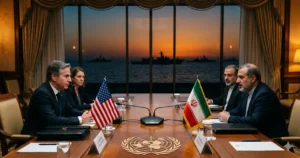
Iran’s response was swift and deflating. Foreign Ministry spokesman Esmail Baghaei told state media that reports of a finalised agreement were “merely speculation” and that Tehran had “not yet reached a final decision regarding any agreement.” He acknowledged that Qatar and Pakistan were active as mediators, but accused Washington of “constantly changing its views and putting forward new or contradictory demands.”
“A large portion of the text had already been finalised. However, the Americans kept changing their positions,” Baghaei said. He added that Iran had “proven that it does not compromise on what it has defined as its red lines.”
Hardline lawmakers inside Iran were even less forgiving. Ebrahim Rezaei, spokesperson for the Iranian parliament’s National Security and Foreign Policy Committee, warned publicly that “the probability of deception by Trump is high,” urging Iran to “strike harder, destroy and annihilate the enemy’s infrastructure.” He threatened catastrophic consequences if the U.S. moved against Kharg Island, saying: “If you come, you will not return alive.”
Nuclear Questions at the Core
At the heart of the proposed deal lies Iran’s nuclear programme — the central fault line that has defined U.S.-Iran relations for two decades. Trump has emphasised Iran’s commitment to never acquiring a nuclear weapon, while Israeli Prime Minister Benjamin Netanyahu — caught off guard by Trump’s announcement while he was in a security meeting about Iran — pushed for a final agreement that would also dismantle nuclear infrastructure, limit missile production, and end Iranian support for regional proxy groups.
Trump spoke by phone with Netanyahu following a post on social media in which the president claimed Israel supported the deal. A Qatari delegation had been in Tehran this week for discussions, and U.S. officials believe those mediation sessions helped resolve some of the remaining sticking points. Iran passed its latest draft of the proposed agreement through Qatari intermediaries earlier in the week.
Global Economy Feels the Heat
The human and geopolitical toll of the conflict has been accompanied by severe economic disruption. With the Strait of Hormuz effectively blocked, prices for oil, natural gas, and fertiliser have spiked across global markets. The World Bank warned this week that the Iran conflict risks pushing global economic growth to its weakest pace since the COVID-19 pandemic, forecasting expansion of just 2.5 percent in 2026 — down from 2.9 percent in 2025.
“A renewed escalation of hostilities or more prolonged disruptions to commodity flows could further raise commodity prices, intensify inflationary pressures and food insecurity, trigger financial stress, and lower growth,” the World Bank said. Under a severe scenario, global growth could collapse to just 1.3 percent.
A Deal — or Another Delay?
As of this writing, no formal agreement has been signed. Trump insists Iran’s supreme leader, Ayatollah Mojtaba Khamenei, is “involved” in the talks and supportive of a resolution, saying “we seem to be getting along quite well.” Secretary of State Marco Rubio told Congress that any sanctions relief for Iran would be “condition-based” and tied to the nuclear programme — not offered freely in exchange for reopening the strait.
“The war is over,” Rubio told a Senate committee in a tense exchange — a statement that sits uneasily alongside Iran’s insistence that it has made no final commitment.
For the millions of people living in the shadow of this conflict — in Iran, Kuwait, Bahrain, and across the Gulf — the difference between a ceasefire and a collapse back into hostilities may be measured in hours. Whether what emerges in the days ahead is a historic diplomatic breakthrough or another chapter of strategic ambiguity remains, for now, unanswered.
Sources: BBC News, CNN