Lede
U.S. security experts say Ukraine’s announcement that it is willing to drop its NATO membership aspiration will likely have little impact on the ongoing peace negotiations with Russia, as diplomats and analysts emphasize that core issues like security guarantees and territorial disputes remain central to the talks.
Background to the NATO concession
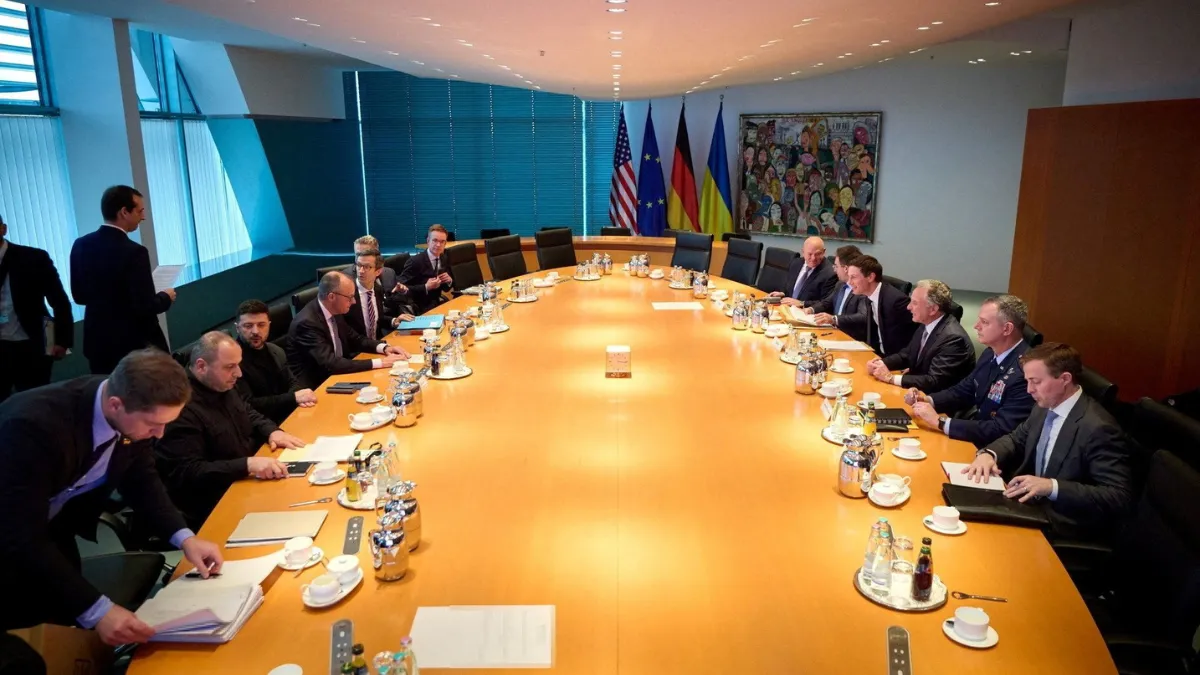
In peace negotiations held in Berlin with U.S. envoys including Steve Witkoff and Jared Kushner, Ukrainian President Volodymyr Zelensky offered to forgo Ukraine’s longstanding aim of joining the North Atlantic Treaty Organization (NATO). This represented a notable shift in Kyiv’s position as it seeks legally binding security guarantees from Western partners in any future settlement.
Ukraine’s NATO ambition has been a cornerstone of its post-2014 security strategy, aimed at deterring Russian aggression. But persistent Russian opposition and geopolitical realities have made the goal increasingly unattainable, even before Zelensky’s offer.
Security experts weigh in
Security analysts in the United States argue that abandoning the NATO goal will not meaningfully advance peace talks. Justin Logan, director of defense and foreign policy studies at the Cato Institute, described the concession as largely symbolic, arguing that Ukraine’s NATO membership “has not been realistic in a long time.” Andrew Michta, a professor of strategic studies at the University of Florida, similarly characterized the issue as a “non-issue” in the current negotiations.
These experts say that the fundamental issues, securing credible security guarantees for Ukraine and resolving territorial disputes with Moscow, will continue to dominate discussions regardless of Ukraine’s formal stance on NATO membership.
Alternate perspectives
Not all commentators dismiss the move outright. Brett Bruen, a former foreign policy adviser in the Obama administration, described Ukraine’s concession as “significant and substantive,” suggesting it could signal Kyiv’s earnest desire to find a negotiated peace. At the same time, he questioned what tangible commitments Ukraine will receive in return for abandoning such a politically charged objective.
Negotiations continue amid broader challenges
The peace talks in Berlin have brought together Ukrainian leaders, U.S. envoys, and European officials to discuss a wide range of issues, including security guarantees that might replace the protections Ukraine hoped NATO membership would provide. Zelensky has emphasized that any such guarantees must be legally binding and approved by the U.S. Congress.
Separately, Russia continues to press its own demands in the conflict, and negotiations are still entangled with territorial disputes, particularly in regions like Donetsk and Luhansk. The larger geopolitical landscape, including Moscow’s insistence on Ukrainian neutrality, adds complexity to the negotiations.
Why it matters
Ukraine’s decision to shift away from NATO membership could reshape diplomatic narratives, but experts suggest it does not remove the core tensions at the heart of the conflict or fundamentally alter the bargaining positions in peace talks. The move highlights Kyiv’s willingness to explore compromises, but prospects for a durable peace agreement remain contingent on substantive security arrangements and solutions to territorial and sovereignty disputes that satisfy both Kyiv and Moscow.
What to watch next
- Security guarantee proposals: Whether Western nations formalize legally binding security guarantees as an alternative to NATO membership.
- Territorial negotiations: Progress on contentious issues such as control over Donetsk, Luhansk, and Crimea.
- Russian responses: How Moscow reacts to Ukraine’s concession and whether it leads to substantive shifts in Russian negotiation positions.
- Congressional and international reaction: How U.S., European, and NATO states respond politically and legally to Ukraine’s proposal and any resulting peace framework.