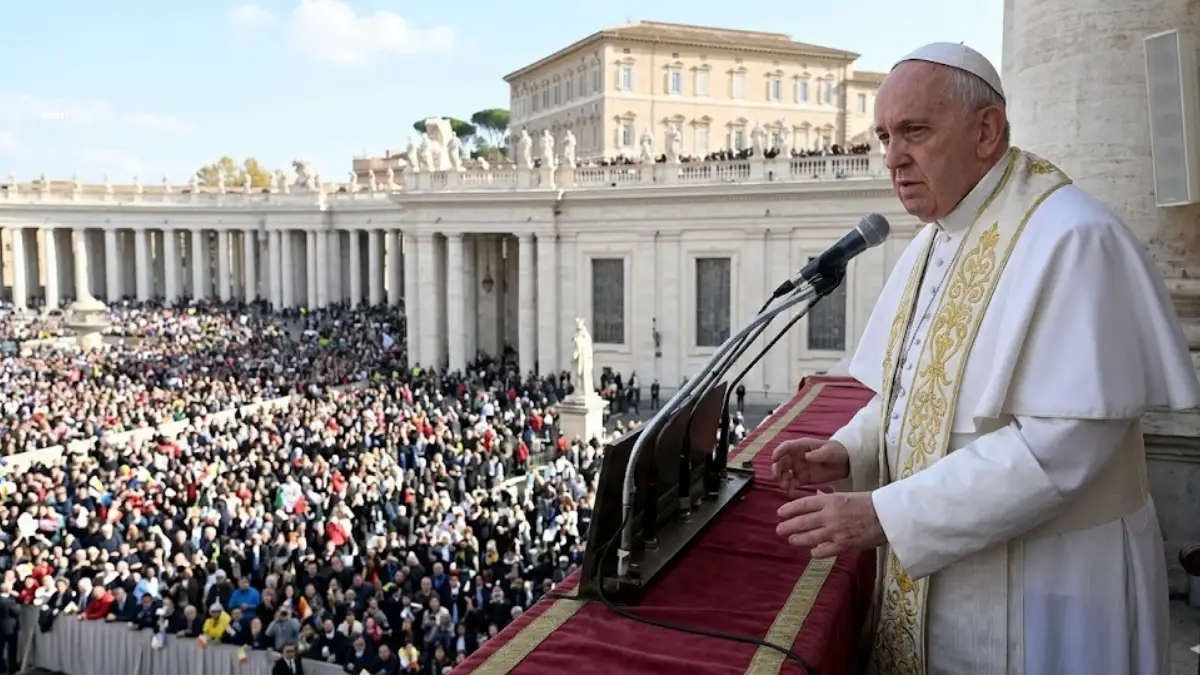
In a landmark moment for the Catholic Church, Pope Leo, the first American pontiff in history, delivered his inaugural Urbi et Orbi Easter blessing from St. Peter’s Basilica, addressing millions of faithful worldwide.
A Historic First for the Papacy
The Pope Leo Easter Urbi et Orbi blessing marks a defining moment not only in religious tradition but also in the geopolitical and cultural evolution of the Vatican. As the first pope born in the United States, Pope Leo’s appearance on the central balcony of St. Peter’s Basilica carries symbolic weight, signaling a shift toward a more globally representative Church leadership [1].
The Urbi et Orbi—Latin for “to the city and the world”—is among the most significant papal addresses, traditionally delivered on Easter Sunday, Christmas, and immediately following the election of a new pope. It serves as both a spiritual message and a reflection on global challenges.
Message Themes: Unity, Conflict, and Renewal
In his first Easter address, Pope Leo emphasized themes of unity, reconciliation, and global responsibility. According to Vatican tradition, the blessing also includes a call for peace in regions affected by conflict and humanitarian crises.
While the full text of Pope Leo’s message has not yet been officially archived in public Vatican records at the time of reporting, early summaries indicate that he referenced ongoing global tensions and urged world leaders to prioritize dialogue over confrontation.
Such messaging aligns with long-standing papal diplomacy, where Easter addresses often highlight wars, displacement, and economic inequality as moral concerns requiring international cooperation.
Continuity and Change at the Vatican
Despite the historic nature of his election, Pope Leo’s delivery of the Urbi et Orbi blessing adhered closely to established Vatican ritual. Standing before thousands gathered in St. Peter’s Square and millions watching globally, the pope followed the liturgical structure that has defined Easter celebrations for centuries.
However, analysts note that the symbolism of an American pope could influence the Church’s engagement with Western political dynamics, particularly in the United States, where Catholicism plays a significant but complex role in public life.
Global Reactions and Significance
The Pope Leo Easter Urbi et Orbi blessing has drawn widespread international attention, not only from religious communities but also from political observers. The emergence of a U.S.-born pope introduces new questions about how the Vatican may navigate issues such as global diplomacy, interfaith relations, and moral leadership in an increasingly polarized world.
Analysis: The election of Pope Leo and his first major public address reflect a broader trend within the Catholic Church toward geographic diversification of leadership. Historically dominated by European figures, the papacy has gradually expanded to represent the global South and now North America.
This shift may carry implications for how the Church addresses modern challenges, including secularization in the West and rapid growth in Catholic populations across Africa and Asia.
What Comes Next
As Pope Leo begins his tenure, his first Urbi et Orbi blessing sets the tone for his papacy—balancing tradition with the expectations of a rapidly changing global audience.
Key questions remain about how his American background will shape Vatican policy and messaging, particularly in relation to international conflicts and ethical debates.
For now, the moment stands as both a continuation of one of Christianity’s most sacred traditions and the beginning of a new chapter in Church history.