
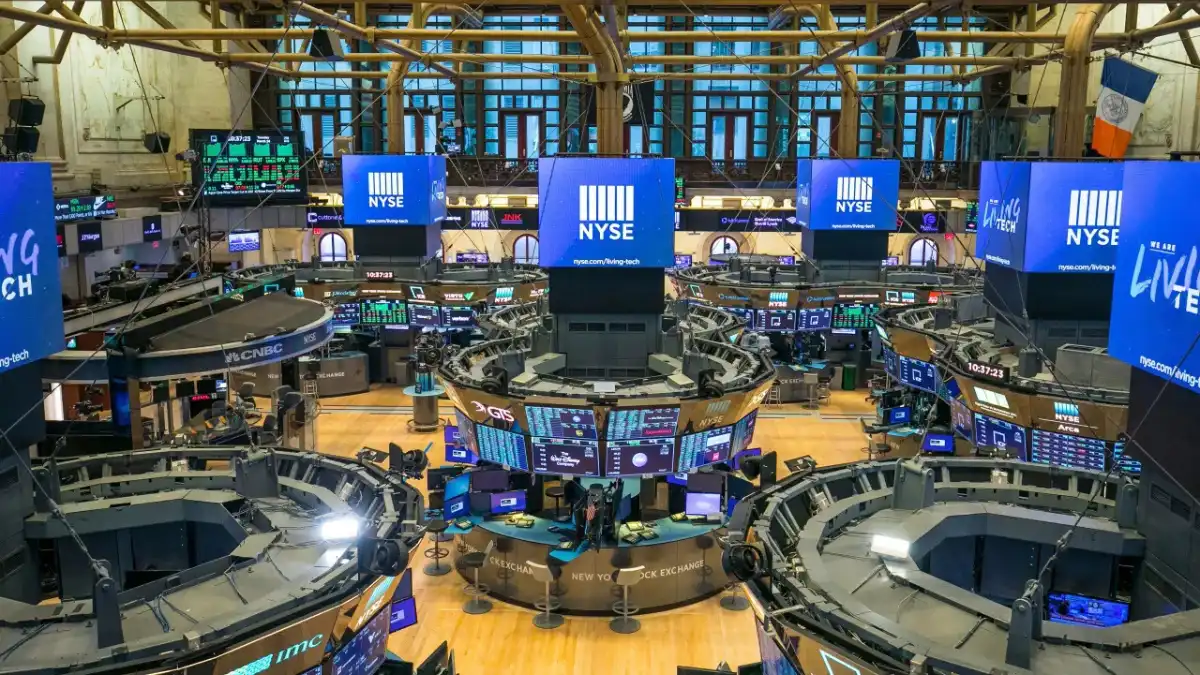
US stocks closed higher on Monday, lifted by strong gains in chipmakers and other companies tied to artificial intelligence, while smaller companies also posted sharp advances, signaling a broad-based rally fueled by renewed risk appetite.
The gains underscored Wall Street’s continued enthusiasm for AI-related growth, with investors once again favoring technology and innovation-driven names after weeks of uneven trading.
AI-Linked Chipmakers Power the Rally
Shares of leading semiconductor firms — widely seen as the backbone of the AI boom — were among the day’s strongest performers. Companies supplying advanced processors and data-center hardware benefited from fresh optimism around long-term demand for AI computing infrastructure.
Market participants pointed in particular to sustained strength in companies such as Nvidia, whose chips have become central to training and running large AI models. The rally in chipmakers helped lift major benchmarks, including the S&P 500 and the Nasdaq Composite, both of which are heavily weighted toward technology stocks.
Analysts noted that unlike earlier speculative surges, the current wave of buying is still anchored — at least partially — in strong earnings growth and corporate spending commitments on AI infrastructure.
Small Caps Join the Upswing
Beyond big technology names, small-cap stocks also rose sharply, suggesting that investor confidence is spreading beyond a narrow group of mega-cap companies.
The Russell 2000 outperformed broader indexes, a move some strategists interpret as a sign that investors are positioning for improving economic conditions and potential interest-rate relief later this year.
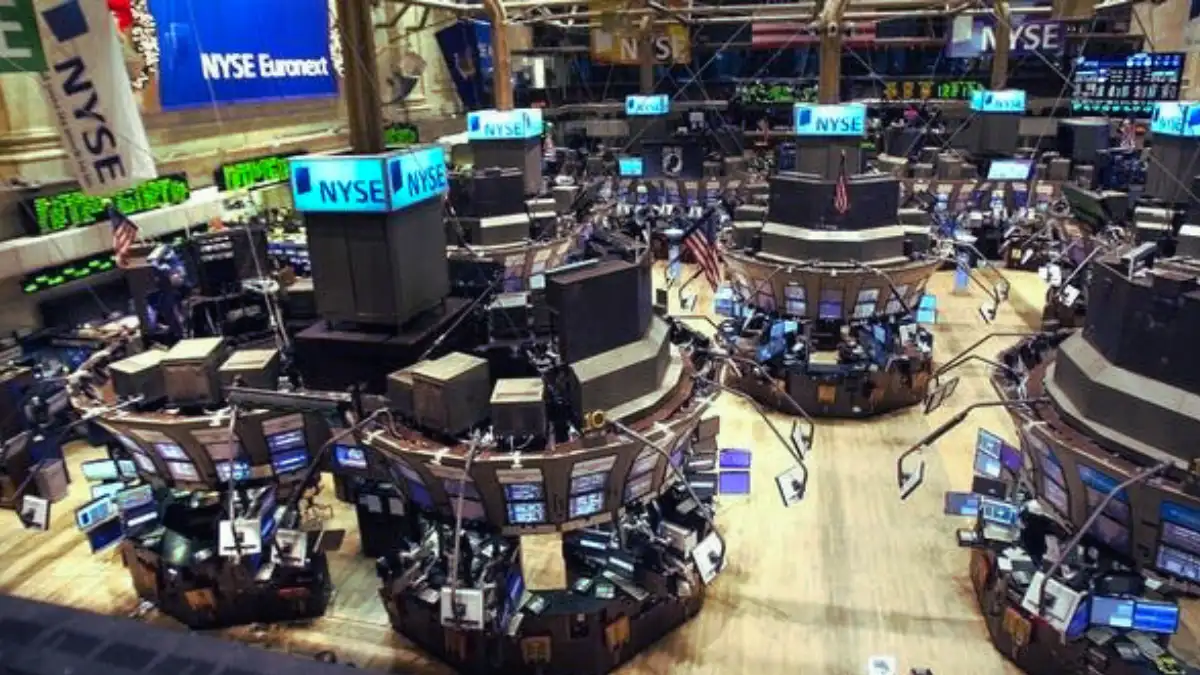
Historically, strong small-cap performance has often coincided with periods when markets believe growth will broaden beyond a handful of dominant firms.
Why the AI Rally Keeps Defying Gravity
Artificial intelligence remains one of the most powerful narratives driving global markets. Corporations across sectors — from finance to healthcare to manufacturing — continue to announce AI investments aimed at boosting productivity and cutting costs.
This has created a feedback loop: capital spending fuels chip demand, chip demand lifts earnings expectations, and rising share prices reinforce confidence in the AI story.
Yet as valuations climb, skepticism is growing alongside enthusiasm.
Analysis: When Will the “AI Slop Bubble” Pop?
The key question many investors are now asking is when — not if — the AI “slop” bubble will burst.
Estimated timeframe: late 2026 to 2028, rather than an imminent collapse.
Here’s why:
First, this is not a classic dot-com-style bubble yet. Unlike the late 1990s, many of today’s leading AI companies are highly profitable, with real revenue streams, strong balance sheets, and visible customer demand. That reduces the likelihood of a sudden, near-term implosion.
Second, the current excess is forming at the application layer, not the infrastructure layer. While chipmakers and cloud providers are benefiting from genuine demand, a growing number of low-quality AI startups — often producing recycled, low-value content or “AI slop” — are attracting funding primarily on hype rather than defensible business models.
Third, bubbles typically burst when expectations collide with slowing growth, not when enthusiasm peaks. That collision is most likely to occur when:
- Corporate AI spending growth plateaus
- Margins compress due to competition
- Regulators intervene on data, copyright, or labor displacement
Most economists and technology analysts expect those pressures to intensify after widespread AI adoption is already priced into markets, which points to a later correction rather than an immediate one.
More likely than a crash is a long “AI digestion phase” — where valuations flatten, weaker companies fail quietly, and capital concentrates in a smaller number of winners.
In short, the AI bubble is inflating unevenly, not uniformly — and that makes it more resilient, but also harder to unwind cleanly.
What Investors Are Watching Next
In the near term, markets will focus on:
- Corporate earnings guidance tied to AI spending
- Interest-rate expectations, which influence risk appetite
- Regulatory signals around AI governance and competition
Any sharp shift in these factors could trigger volatility — but absent a major shock, analysts say AI-driven stocks are more likely to experience selective pullbacks rather than a broad collapse.
A Market Riding Two Currents
Monday’s rally highlighted a defining feature of today’s markets: excitement and caution coexisting. AI optimism continues to lift stocks, while deeper questions about sustainability linger beneath the surface.
For now, Wall Street is choosing to ride the wave — fully aware that eventually, gravity will matter again.