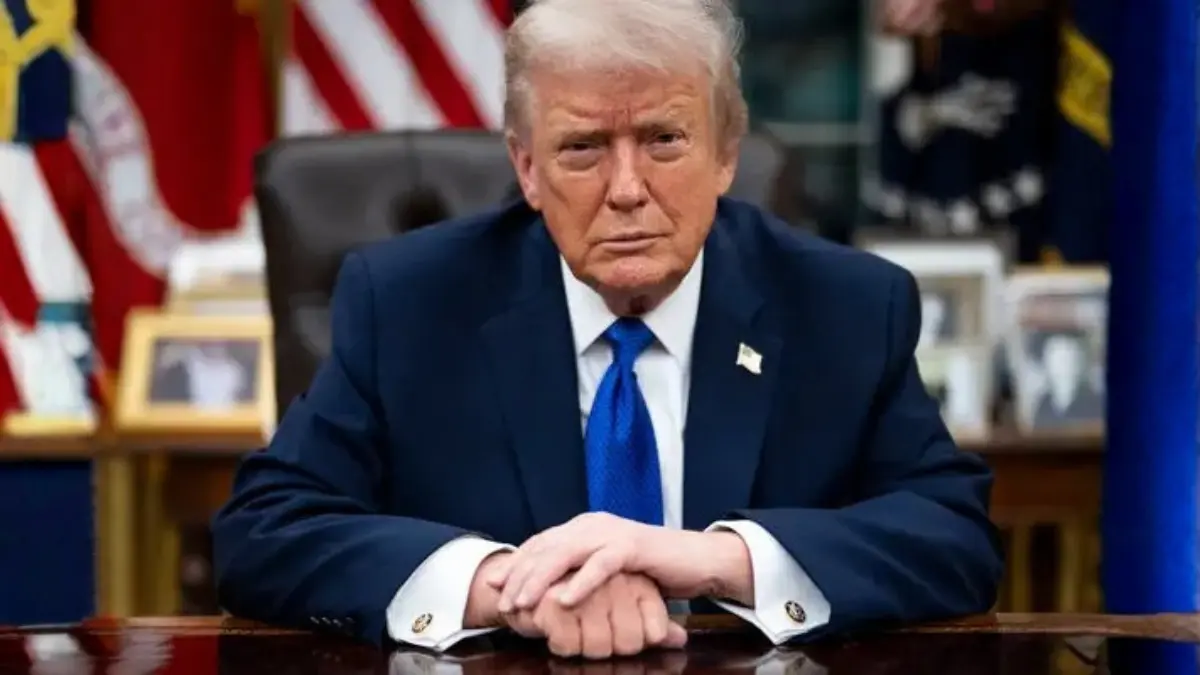
WASHINGTON — The 25th Amendment to the U.S. Constitution has resurfaced in political debate as critics and commentators once again raise it as a theoretical pathway to remove Donald Trump from the presidency, underscoring the depth of political tension surrounding his leadership. [1]
The amendment, ratified in 1967 following the assassination of President John F. Kennedy, outlines procedures for dealing with presidential incapacity. While largely designed to address physical or medical inability to perform the duties of office, it has periodically been invoked in political discourse during moments of intense controversy — most notably during Trump’s first term. [1]
Under Section 4 of the amendment, the vice president and a majority of the cabinet can declare the president “unable to discharge the powers and duties of his office,” temporarily transferring authority to the vice president. The president can contest that declaration, triggering a vote in Congress that would require a two-thirds majority in both chambers to keep the president sidelined. [1]
Why the amendment is being discussed again
The renewed focus does not reflect any formal move by Trump’s cabinet or the vice president. Rather, it has emerged amid heightened scrutiny of Trump’s conduct, rhetoric and decision-making, with opponents arguing — without providing medical evidence — that his behaviour raises questions about fitness for office. Supporters dismiss such claims as politically motivated and constitutionally inappropriate. [1]
Legal scholars note that the bar for invoking the 25th Amendment is deliberately high. It was not designed as a tool for resolving political disputes or policy disagreements, but as a safeguard for extreme circumstances in which a president is demonstrably incapacitated. No president has ever been permanently removed under Section 4, and its use would almost certainly trigger a prolonged constitutional confrontation.
Political and constitutional reality
Experts say that, despite recurring discussion, the amendment remains an unlikely mechanism for removing a sitting president absent overwhelming consensus within the executive branch and Congress. Any attempt to invoke it would require cooperation from senior officials appointed by the president himself — a scenario widely viewed as improbable.
The debate nonetheless reflects the broader polarization of U.S. politics and the fragility of institutional norms during periods of sustained political conflict. It also highlights how constitutional provisions intended as emergency safeguards can become focal points in partisan battles, even when the legal thresholds are unlikely to be met.