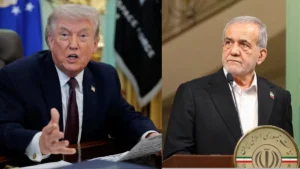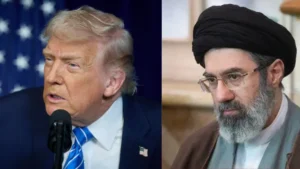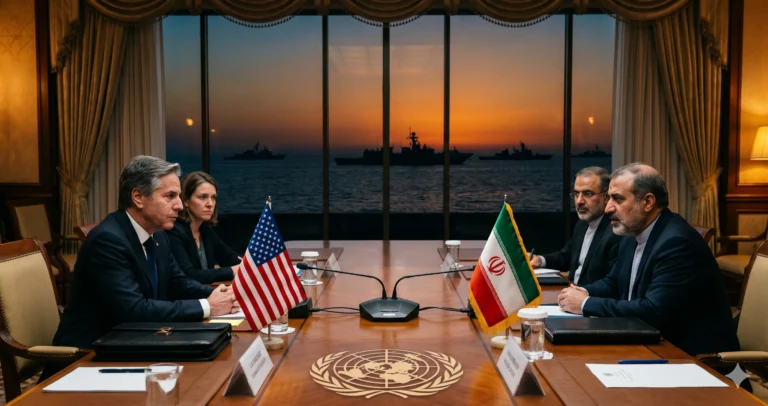
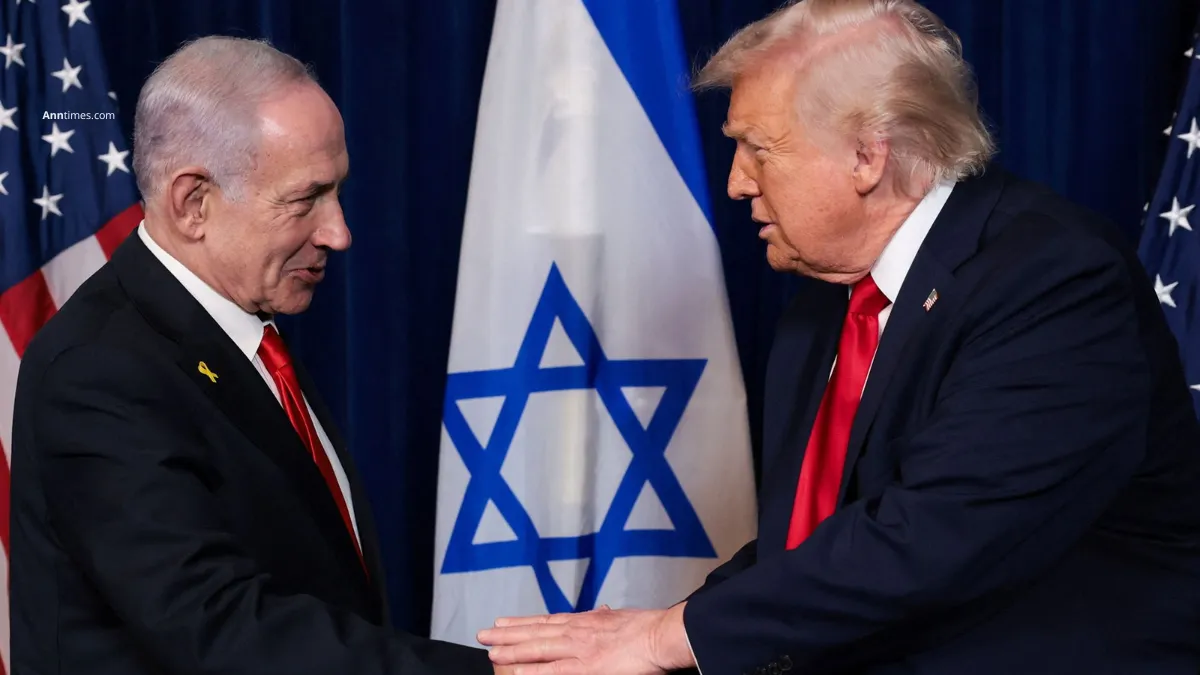
WASHINGTON — U.S. President Donald Trump has issued one of his most uncompromising statements yet on the escalating Iran conflict, declaring that the United States will accept no agreement with Tehran short of “unconditional surrender.”
The declaration marks a sharp escalation in rhetoric as the confrontation involving Iran, Israel, and the United States enters a critical phase.
Posting on social media, Trump wrote: “There will be no deal with Iran except UNCONDITIONAL SURRENDER.”
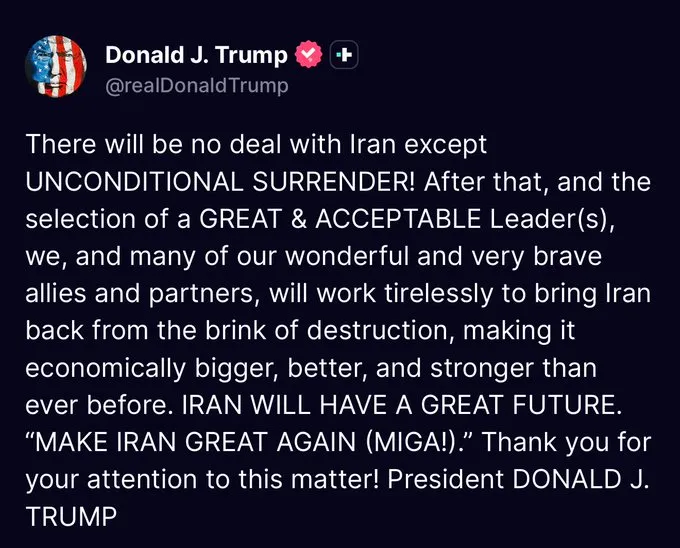
The message signals that Washington is not currently pursuing negotiations with Tehran and instead appears to be setting maximalist war aims.
Hardline Position as War Intensifies
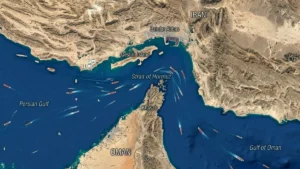
The Trump unconditional surrender Iran statement comes roughly a week after joint U.S.–Israeli military operations against Iranian targets began, dramatically raising tensions across the Middle East.
The demand echoes historical wartime ultimatums, most notably the Allied call for unconditional surrender from Axis powers during World War II.
Trump suggested that after such a surrender, the United States and its allies would help rebuild Iran’s economy and political system.
He also indicated that a new Iranian leadership acceptable to Washington and its partners would need to emerge before reconstruction could begin.
Iran Rejects Ultimatum
Iranian officials have pushed back against the rhetoric, saying the country will not accept foreign dictates regarding its sovereignty.
Iran’s leadership has maintained that external pressure will not force capitulation and has framed the conflict as resistance against foreign aggression.
The ultimatum therefore appears unlikely to produce immediate diplomatic progress.
Collapse of Diplomatic Pathways
The statement underscores how far relations between Washington and Tehran have deteriorated.
Diplomatic channels between the two countries have been strained for years, particularly since the United States withdrew from the 2015 Joint Comprehensive Plan of Action (JCPOA) nuclear agreement in 2018.
That deal had placed limits on Iran’s nuclear activities in exchange for sanctions relief.
Since its collapse, tensions have steadily increased through sanctions, military incidents, and regional proxy conflicts.
Strategic Implications
Foreign policy analysts say the demand for unconditional surrender dramatically narrows diplomatic options.
In modern international conflicts, such ultimatums are rarely accepted by states because they imply total political defeat and regime change.
Instead, they often signal that military pressure will continue until one side’s capacity to resist is severely weakened.
Some observers believe the rhetoric may also serve domestic political messaging, reinforcing the administration’s image of strength during a high-stakes international crisis.