Opinion: Why Iran’s Warning Matters, and Why the World Should Take It Seriously
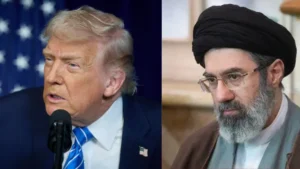
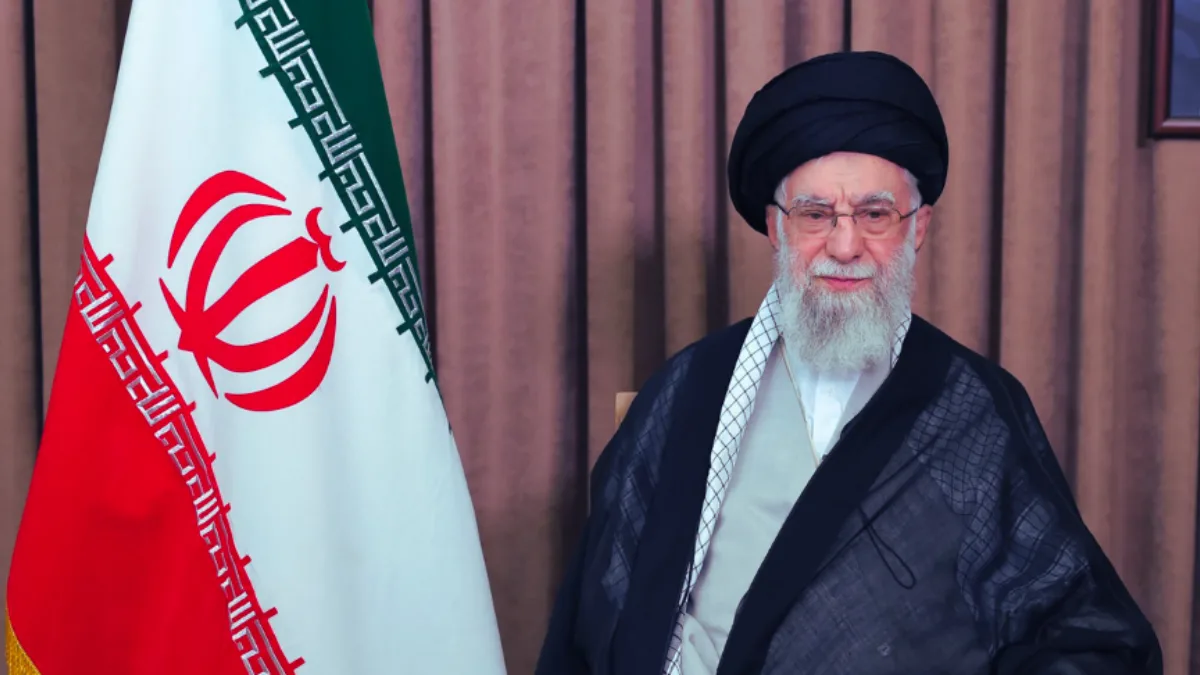
On 1 February 2026, Ayatollah Ali Khamenei, the Supreme Leader of the Islamic Republic of Iran, delivered a stark warning: if the United States were to launch a military attack on Iran, the conflict “would not remain confined to Iran’s borders” but would instead escalate into a larger regional war. Beyond diplomatic brinkmanship, this statement reflects ancient geopolitical fault lines, unresolved historical grievances, and very real material interests in the Middle East, an arena where the costs of war could be catastrophic, not just for Tehran and Washington, but for countless civilians across the region.
In interpreting these remarks, it’s important not just to assess their immediate political context, but also to understand the broader strategic dynamics at play. While some commentators hastily dismiss Iran’s warning as rhetorical posturing, a closer look reveals layers of meaning, strategic deterrence, domestic politics, geopolitical signaling, and the fragile architecture of Middle Eastern stability.
1. The Substance Behind the Threat
At face value, Khamenei’s warning is clear: the United States’ use of military force against Iran would not be a limited engagement; it would likely spread. “The Americans should know that if they start a war, this time it will be a regional war,” he said, adding that Iran would strike decisively at anyone who attacked or harassed it.
This is not random rhetoric. Khamenei’s words are grounded in a complicated history of conflict, mistrust, and prior escalations between Tehran and Washington, including the 2020 assassination of General Qasem Soleimani by U.S. forces, which unleashed immediate Iranian retaliatory strikes and sharply raised tensions.
In this context, Khamenei’s warning serves as a deliberate deterrent: to make clear that the cost of war, whether initiated by the U.S. or perceived to be so, would vastly outweigh the limited gains of any such operation. That is a rational calculation, not empty bluster.
2. Why a U.S. Attack Could Trigger Wider Conflict
A closer read of Iran’s regional posture reveals multiple channels through which localized conflict could easily expand:
A. Proxies and Asymmetric Warfare
Iran has for decades invested heavily in regional partnerships with non-state militias and allied forces, from Hezbollah in Lebanon to Shia militias in Iraq and Syria. In a war with the U.S., these groups would almost certainly be drawn into the conflict. This means that even if direct military operations are focused on Iranian territory, Iran’s network of aligned forces could hit U.S. interests across the region, multiplying the scope of conflict.
B. Strategic Geography of the Strait of Hormuz
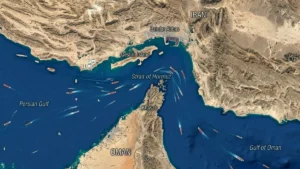
Iran sits astride the Strait of Hormuz, a chokepoint through which roughly one-fifth of the world’s oil flows. Any disruption in this waterway, a likely consequence of military hostilities, would instantly drive up global energy prices, alarm oil-dependent economies, and drag other powers into the crisis, whether through naval deployments or economic responses.
C. Alliance Dynamics and Regional Rivalries
A conflict between Iran and the U.S. would not occur in a vacuum. Israel, a U.S. ally, sees Iran’s nuclear program and missile capabilities as existential threats. Gulf Arab states like Saudi Arabia and the United Arab Emirates would be forced to choose sides or risk direct spillover. In effect, what begins as a U.S.–Iran clash could become Iran vs. U.S. allies vs. Iran’s partners, a formula that quickly becomes a full-blown regional conflagration.
All of this underlines the sobering reality: Khamenei’s warning is not an exaggeration of potential consequences, it is a fairly accurate projection of how a limited attack could spiral into widespread war.
3. Iran’s Strategic Intent, Defense, Not Aggression?
Supporters of Tehran argue that Khamenei’s speech is defensive, not expansionist. In his remarks, he insisted Iran does not seek to start a war, but will respond forcefully if attacked.
This framing is critical. By couching the warning in defensive terms, Iran is attempting to preserve political legitimacy both at home and abroad. It projects a posture of strength while denying any offensive intent. This dual messaging allows Tehran to dismiss U.S. pressure as unjustified aggression, even as it takes steps to bolster deterrence.
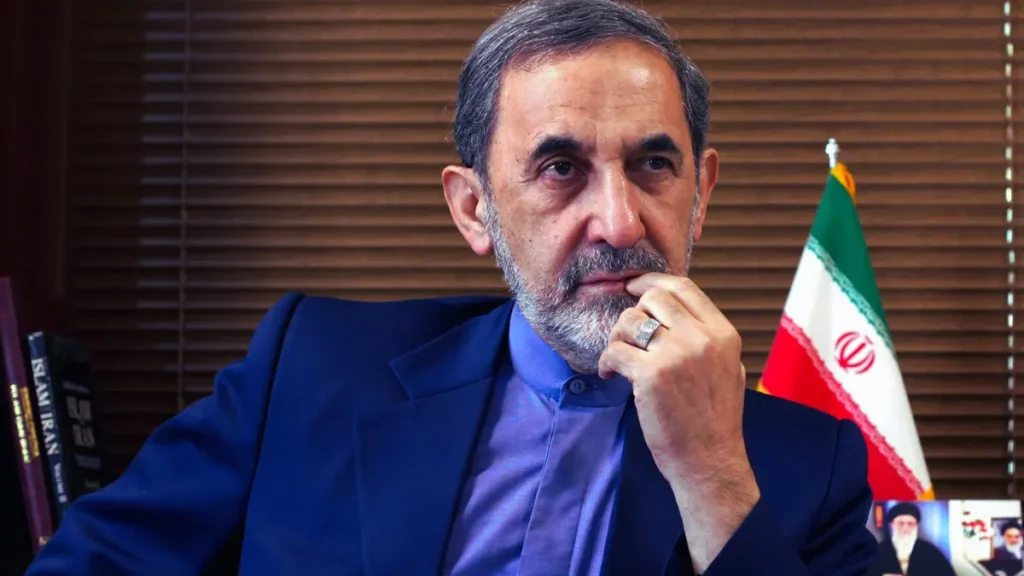
Whether one accepts this portrayal at face value is another question: Tehran’s human rights abuses, suppression of dissent, and regional interventions, which many critics view as destabilizing, complicate claims of purely defensive posturing. But strategic signaling theory would predict exactly this kind of diplomatic language from a state that wants to raise the perceived cost of enemy action.
4. Domestic Politics and the Iranian Narrative
Khamenei’s statement also plays to a domestic audience. Nearly a month of nationwide protests, triggered by economic hardship and political grievances, has challenged the Iranian government’s internal legitimacy. In recent months, Iranian leadership has described the uprisings as akin to a coup attempt and accused foreign powers of supporting domestic unrest.
Highlighting an external threat, in this case, potential U.S. military action, can serve multiple political purposes:
- Unite the population against a common external enemy.
- Deflect criticism from domestic governance failures.
- Reinforce the perception that Iran is a besieged nation, resisting foreign powers.
This is not unusual in authoritarian contexts, where geopolitical threats are used to solidify regime control. But it does mean that Khamenei’s warning has an audience beyond Washington, it is also meant to reassure and rally Iranians at home.
5. The U.S. Response and Its Limits
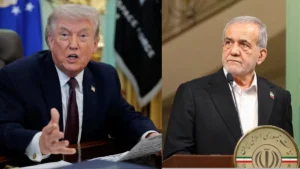
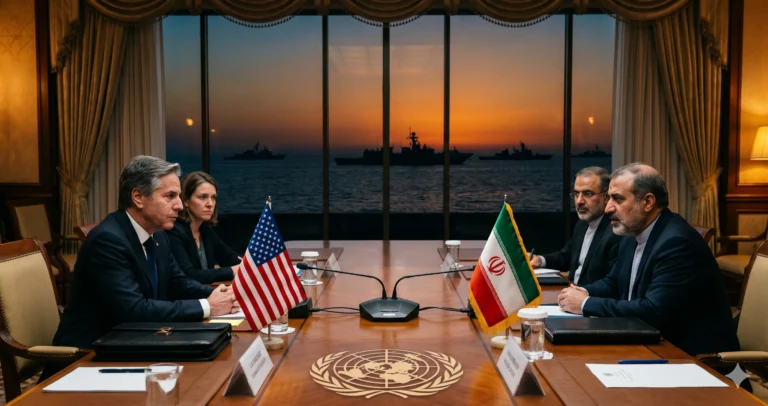
American leaders, including President Donald Trump, have demonstrated ambivalence. On one hand, Trump has made aggressive statements and increased U.S. naval presence near Iran. On the other, he has expressed hope for negotiations and a diplomatic resolution.
This mixed messaging highlights a central tension in U.S. policy: how to balance deterrence with diplomacy. Hardline elements in Washington may favor confrontation to curb Iran’s nuclear and missile programs. Others worry that military action could entangle the U.S. in a complex regional war with no clear exit strategy.
Khamenei’s warning is calibrated to exploit exactly this ambiguity. By raising the specter of a regional war, Iran is betting that the U.S. decision-makers will calculate the risks of escalation as too high compared to any limited military objective.
6. A Wider Regional Risk: Beyond Iran and the U.S.
If the U.S. were to attack Iran, the repercussions would not just be bilateral. A regional war could trigger massive displacement of civilians, widespread infrastructure destruction, and a humanitarian crisis.
It could also empower extremist groups, whose anti-Western narratives would gain traction amid chaos. Non-state militias could seize the opportunity to deepen their influence. Economies already fragile due to pandemic aftershocks, inflation, and energy market volatility could collapse under the strain of conflict.
In this scenario, neighboring states such as Iraq, Syria, Lebanon, and Yemen, already fractured by ongoing conflicts, could be sucked into broader upheaval. The Middle East has long been a tinderbox; an ignition in one place can quickly ignite conflagrations elsewhere.
7. Why Diplomacy Still Matters
History offers lessons on what happens when diplomacy fails. The U.S. invasion of Iraq in 2003 drastically reshaped the region, inaugurating years of violence and instability. A similar miscalculation involving Iran could be orders of magnitude larger in its consequences.
Even critics of Tehran must recognize that deterrence and war avoidance are rational objectives. The international community, including regional powers like Turkey, Qatar, and Saudi Arabia, has shown signs of wanting to reduce tensions and get back to dialogue.
Diplomacy is not a sign of weakness. In this highly interconnected era, wars inevitably draw in allies, fuel economic instability, and impose human costs that far exceed the original grievances.
Conclusion
Ayatollah Khamenei’s warning that an American attack on Iran could ignite a regional war in the Middle East is not mere hyperbole, it is a sober assessment anchored in the geopolitical reality of our times. The Middle East’s historical fractures, coupled with modern military capabilities and networked alliances, make any large-scale conflict extraordinarily dangerous.
Both Tehran and Washington would do well to heed this warning, not as a provocation, but as a reminder of the outsize consequences of war. In an age where a single decision can trigger cascading crises across borders and populations, restraint, undergirded by robust diplomacy, remains the most responsible course.
Only through genuine dialogue and mutual acknowledgment of shared risks can the region hope to avoid sliding into the very conflict that both sides now publicly dread.