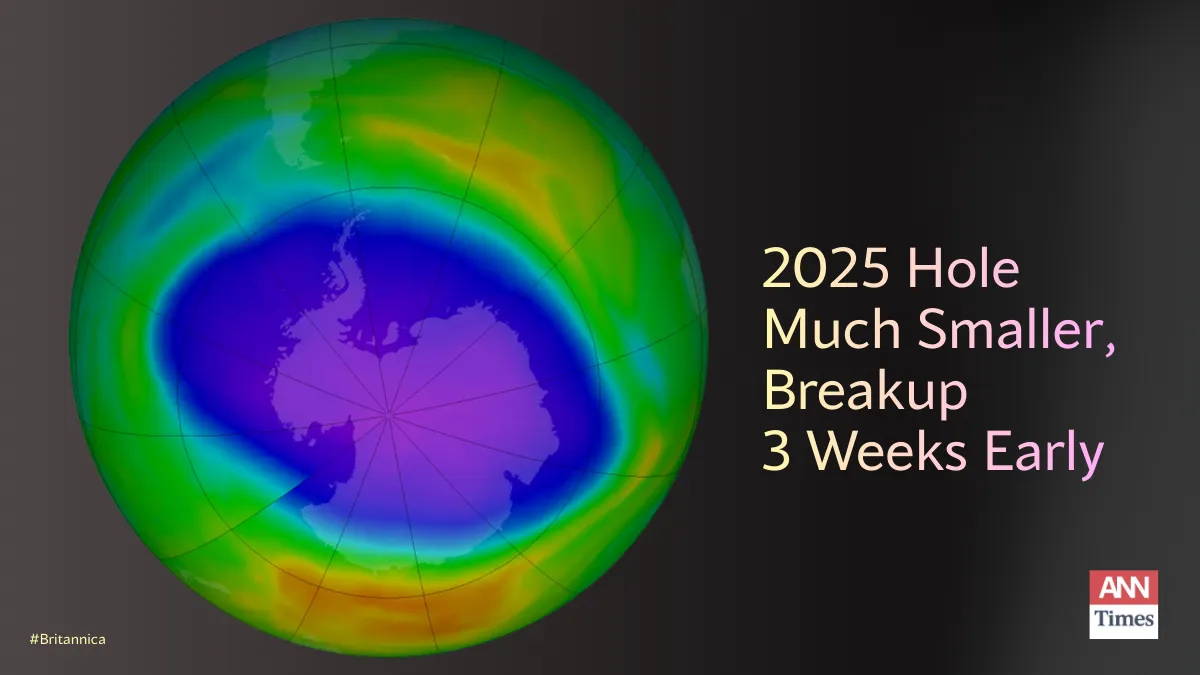
According to joint findings released by NASA and NOAA, the ozone hole over Antarctica in 2025 ranked as the fifth smallest since 1992, a significant milestone in the gradual recovery of Earth’s protective ozone layer.
At the peak of this year’s depletion season (from September 7 to October 13), the average area of the ozone-depleted region was about 7.23 million square miles (18.71 million square kilometers), roughly double the size of the contiguous United States. The hole’s maximum single-day extent reached approximately 8.83 million square miles on September 9, marking a sizeable but more moderate depletion compared with record years. NASA Scientific Visualization Studio
Moreover, scientists noted that this year the hole began breaking up nearly three weeks earlier than in a typical season over the last decade, signaling not just a smaller opening, but an earlier recovery start.
Experts say these improvements reflect the long-term success of global efforts under the Montreal Protocol, the landmark agreement that phased out many of the chemicals responsible for ozone depletion. The decline in usage of ozone-destroying substances has allowed the stratosphere to slowly heal, and this year’s data suggests the ozone layer remains on track for gradual restoration over the coming decades.
Recovery of the ozone layer carries major benefits: with fewer gaps in ozone, more of Earth’s natural “sunscreen” remains, reducing harmful ultraviolet (UV) radiation reaching the surface. That lowers risks of skin cancer and cataracts in humans, protects crops, and shields ecosystems, especially fragile polar and marine life, from damage.
Still, scientists caution that recovery will be gradual and uneven. The Antarctic remains prone to periodic variability due to atmospheric conditions, such as polar vortex strength, stratospheric temperatures, and other climate-related phenomena, which can affect the size and duration of each year’s ozone depletion. Nevertheless, the overall downward trend in hole size over decades offers a strong indication that sustained global cooperation and regulation can successfully reverse environmental damage.