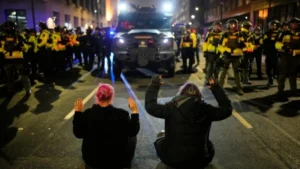

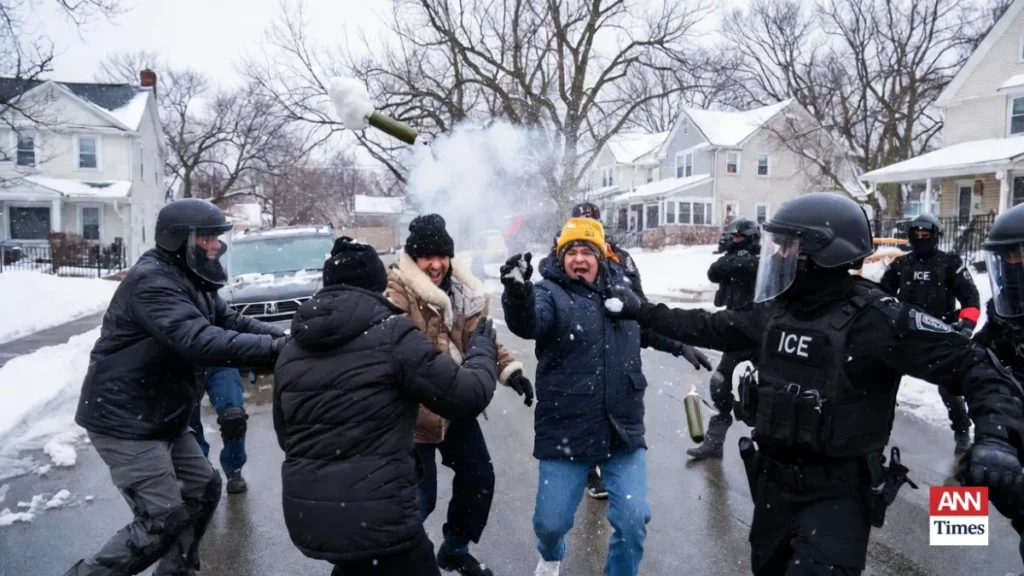
ELGIN, Ill. — A routine ICE raid turned into a winter riot Saturday when dozens of anti-deportation protesters surrounded a Chicago-area apartment complex and pelted federal agents with snowballs, rocks, and bottles to prevent the arrest of a suspected Tren de Aragua gang member.
The target, 28-year-old Venezuelan Yosber Alexander Acosta, allegedly rammed an ICE vehicle during a traffic stop, injuring an officer, then fled to a balcony. As agents moved in, the crowd — some wearing gas masks — formed a human shield and bombarded officers, prompting the use of tear gas. Local police, citing Illinois sanctuary laws, refused to assist.
DHS condemned the attack as “dangerous interference” with lawful deportation operations under Trump’s crackdown. Acosta was eventually taken into custody and now faces expedited removal. The incident marks the latest flashpoint between federal immigration enforcement and sanctuary strongholds in President Trump’s second term.
DHS, in a sharply worded statement, decried the melee as a “direct assault on law enforcement,” noting that Elgin police – bound by the state’s Trust Act prohibiting aid to federal immigration ops – refused multiple calls for backup, leaving agents to fend for themselves amid the chaos. Acosta, holed up for hours as negotiations dragged on, was eventually cuffed without further incident, his deportation now expedited under the Trump-Noem axis that’s branded Tren de Aragua a terrorist threat.
But the human toll lingers: a federal officer with whiplash from the crash, protesters nursing chemical burns, and a community fractured by accusations of harboring criminals. Activists like those from the Chicago Alliance Against Racist and Political Repression argue the raid was a pretext for terrorizing migrants, pointing to earlier operations in South Shore where 37 were detained, only two confirmed as gang-linked.
“They’re not after gangs; they’re after brown faces,” one demonstrator, who declined to give her name for fear of reprisal, told me as she wiped tear-streaked cheeks. Yet DHS counters with a ledger of victories: since the blitz launched, they’ve uprooted killers, child abusers, and gang enforcers, framing the violence as a choice by “sanctuary politicians” to “side with criminals over American victims.”
As Trump vows to “liberate” cities from migrant crime waves, and Pritzker decries federal “invasions,” the snowballs of Saturday may melt, but the chill of confrontation has settled deep. In a suburb where Venezuelan families once sought asylum from their homeland’s horrors, the line between protector and provocateur blurs in the flurry. Acosta’s arrest is a win for one side, a wound for the other – but in America’s endless border battle, no one’s hands stay clean.
By Javier Ruiz, Southwest Bureau Chief. The author has covered U.S. immigration enforcement for over a decade, from Operation Streamline in Arizona to the family separations of 2018.