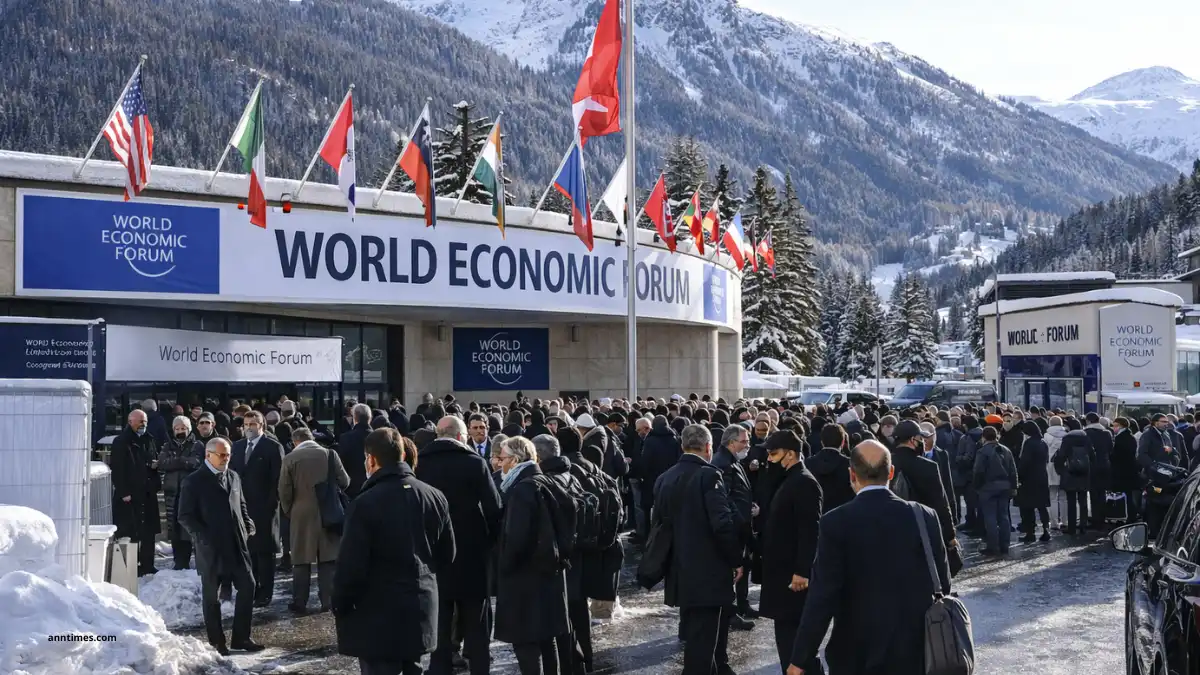
DAVOS, Switzerland — Billionaires and other ultra-wealthy individuals are now roughly 4,000 times more likely than the average person to hold political office, a new global inequality report by the charity Oxfam finds, and the report also highlights concerns about the concentration of media and social media ownership among the super-rich.
Released as world leaders, executives and civil society delegates gather for the World Economic Forum in Davos, the report paints a stark picture of how extreme wealth translates into disproportionate influence over political institutions and public discourse.
According to the Oxfam analysis, the wealthiest individuals are vastly more likely to occupy positions of political power than ordinary citizens, a disparity that underscores a persistent and growing political inequality entwined with economic inequality.
What the Oxfam Report Says
Oxfam’s 2026 global inequality report shows that the combined wealth of the world’s richest has surged to record levels — roughly $18.3 trillion in 2025, an increase of about 16 percent from the previous year. This rapid accumulation of wealth comes amid broader trends that favor asset-heavy investors and owners of major corporations.
From the charity’s perspective, this wealth concentration has translated into political power that far outstrips that of ordinary people. Based on data collected from lists such as Forbes’s billionaire rankings and global governance statistics, Oxfam estimated that billionaires are approximately 4,000 times more likely than the “ordinary global citizen” to hold executive or legislative political office.
The underlying causes of this extreme disparity, the report argues, stem from systematically preferential economic policies — including tax regimes, regulatory environments and political systems that permit large political donations and easy access to lawmakers — which disproportionately benefit super-rich elites and reinforce their ability to shape public policy to their advantage.
Political Power of the Wealthy
The stark 4,000-to-1 ratio reflects the relative prevalence of billionaires in positions of political power compared with the global population at large. For example, researchers noted that among the roughly 2,027 billionaires identified globally, dozens hold or have held political office in recent years, while such positions remain astronomically rare among the typical global workforce.
Political scientists and inequality advocates caution that such concentrated influence can skew policymaking toward the interests of the wealthy and away from the needs of the wider population. Experts say money and influence tend to amplify one another: those with wealth can fund campaigns, access key decision-makers and use media platforms to shape public opinion and legislative agendas. Policy research supports these claims by documenting that wealthy contributors, whether wealthy individuals or corporate entities, disproportionately influence legislative priorities and outcomes.
Media and Social Media Ownership
Another major concern raised by the report is the ownership and influence of media and social media platforms by the ultra-wealthy. While Oxfam does not literally claim that every social media company is owned by a billionaire, it highlights that a significant share of the world’s most influential digital platforms are ultimately controlled by ultra-rich individuals or investment groups.
Examples of this trend include high-profile technology billionaires who own or control major media properties and social networks. One of the most cited cases is Elon Musk’s ownership of X (formerly Twitter), which has become a focal point in debates about content moderation, political messaging and platform governance. Other major tech founders and wealthy investors have similar influence through ownership stakes in platforms that shape public discourse.
This concentration of media control, the charity argues, increases the ability of wealthy elites to influence not just policy behind closed doors but the flow of information and public perception on a massive scale. In many democratic contexts, social media platforms have effectively become the principal means by which news and political debate are disseminated and amplified.
Broader Economic Inequality
The Oxfam report places the political power disparity within a broader context of rising economic inequality. Billionaire wealth, the report notes, has reached unprecedented heights — outpacing global economic growth and far exceeding historical norms. This wealth gain has occurred alongside a stagnation or decline in wealth for large segments of the world’s population, deepening economic divides and eroding social mobility.
Oxfam also points out that the amount of additional wealth accumulated by billionaires in recent years alone would be enough to address extreme poverty and unmet development goals multiple times over, yet policy responses remain limited.