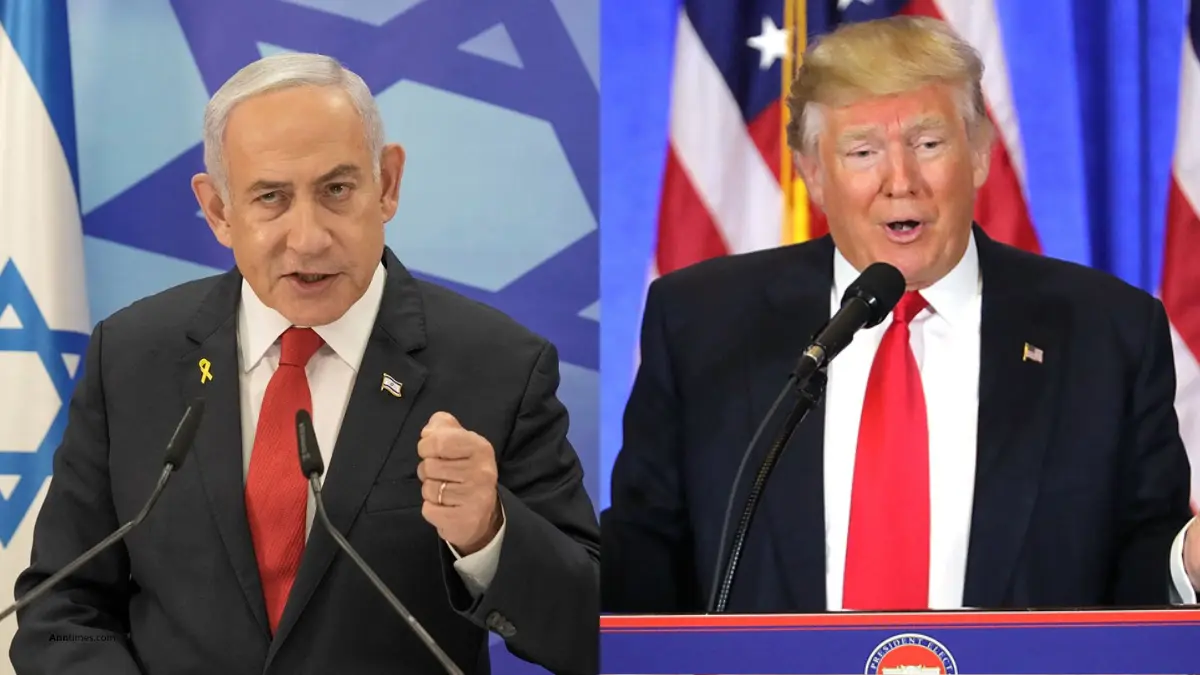
JERUSALEM/WASHINGTON — Israeli Prime Minister Benjamin Netanyahu has publicly rejected the terms and structure of a U.S.-led “Board of Peace” for Gaza after its first members were announced, and reports indicate President Donald Trump is asking countries to contribute up to $1 billion for extended membership on the board, steps that are drawing criticism from Jerusalem and parts of the international community.
The dispute reflects early diplomatic strain in Trump’s ambitious effort to reshape post-conflict governance and reconstruction in the Gaza Strip under a U.S.-centered framework that would operate alongside a proposed Palestinian technocratic administration.
What Netanyahu Has Said
Netanyahu’s office issued a rare public rebuke after the United States and its partners announced the initial makeup of an executive body associated with the Board of Peace, known as the Gaza Executive Board. The prime minister said the announcement was not coordinated with Israel and that the composition “runs contrary to Israeli policy.”
According to Israeli reporting, Netanyahu instructed Foreign Minister Gideon Sa’ar to raise the matter directly with U.S. Secretary of State Marco Rubio, illustrating the level of official concern in Jerusalem over Washington’s unilateral announcement.
Israeli objections focus in part on the inclusion of officials from countries that have tense relations with Israel, such as Turkey and Qatar, on the Gaza board, a move that Israeli leaders say undermines their security priorities and was not discussed with Israeli authorities in advance.
What the Board of Peace Is
The Board of Peace is a new international governance initiative spearheaded by President Trump as part of a multi-phase plan to manage post-war Gaza. Under the scheme, the board — chaired by Trump — would provide high-level oversight over the territory’s reconstruction, stability and interim governance, working alongside a Palestinian technocratic administration and potentially an international stabilization force.
The plan’s architecture, as outlined in diplomatic reporting, calls for a multi-tiered approach including:
- A Board of Peace chaired by Trump.
- A Gaza Executive Board that serves as an operational governance body.
- A Palestinian technocratic government to manage everyday affairs.
Initial appointments to the Gaza Executive Board reportedly include senior officials from several countries, prompting Israeli objections due to the perceived political and security implications.
Reporting on the $1 Billion Membership Condition
Reports first flagged by Bloomberg and confirmed by Reuters indicate that the draft charter for the Board of Peace — circulated to around 60 countries — includes a financial incentive structure for extended membership. Under the draft, countries would serve a membership term of up to three years, but if they **contribute at least $1 billion in cash funds within the first year, they would be exempt from this term limit and could stay on the board longer.
According to that reporting, Trump would personally chair the board and retain significant control over membership decisions and contributions — a setup that critics have characterized as resembling a “mini-United Nations” or a private multilateral structure with significant U.S. influence.
The $1 billion figure is reported as an incentive for nations to commit substantial cash toward the board’s activities and Gaza reconstruction, part of Trump’s broader vision of an international reconstruction mechanism.
U.S. Administration Pushback
The White House has pushed back on interpretations that the $1 billion contribution is a formal “fee” to join the board. An official statement described such reports as misleading, saying there is “no minimum membership fee to join the Board of Peace,” although the concept of contributions for “permanent membership” was acknowledged in context.
White House officials emphasized that the draft charter’s provision is intended to reflect deeper commitment by partner countries to peace, security and reconstruction efforts, not a pay-to-play condition, according to statements responding to press inquiries.
International Reactions
Responses among global leaders have been cautious or mixed:
- Jordan’s foreign ministry acknowledged receiving an invitation to join the board and reviewing the proposal.
- Egypt’s leadership said it was considering involvement, noting that progress on Gaza’s stabilization is difficult without U.S. engagement.
- European states are evaluating their roles, with some eyeing participation and others expressing concern about the board’s structure.
Broader Diplomatic and Policy Context
The Board of Peace initiative is part of Phase Two of the U.S. plan for Gaza’s future, following an authorized ceasefire under UN Security Council Resolution 2803, which welcomed the board’s formation and envisioned an international stabilization force and transitional governance arrangements.
Trump administration envoys, such as Steve Witkoff, have met with Palestinian officials, including Hussein al-Sheikh of the Palestinian Authority, to discuss moving forward with the Board of Peace and related governance and reconstruction mechanisms.
However, key issues remain contentious:
- Hamas’s disarmament has not been fully realized, complicating implementation.
- Israeli coordination on board composition and policy aims remains limited, according to Israeli officials.
- Palestinian representation on the board itself has drawn scrutiny from some quarters, given the initiative’s broad international role.