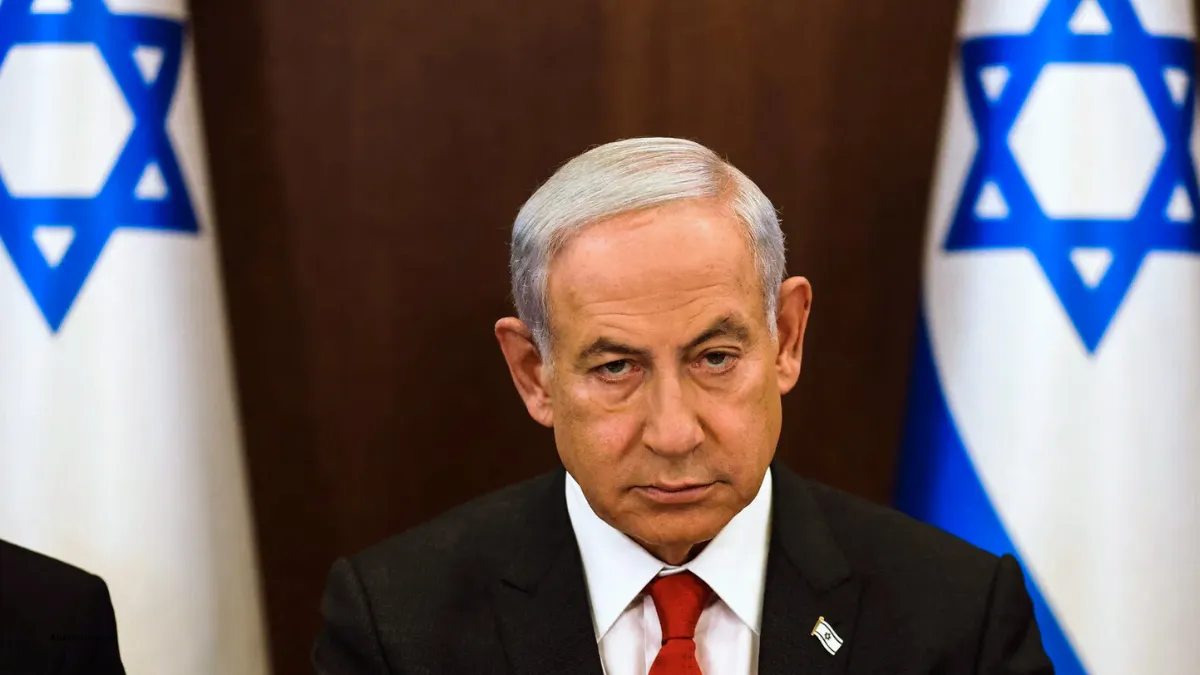
JERUSALEM — Israeli Prime Minister Benjamin Netanyahu has once again rejected the establishment of an independent Palestinian state, saying Israel must retain full security control over all Palestinian territories, a position that further entrenches Israel’s long-standing opposition to international calls for a two-state solution.
Speaking during remarks to lawmakers and senior officials, Netanyahu said that relinquishing security control would pose an unacceptable risk to Israel, citing past attacks and ongoing regional instability. “Israel must have security control over the entire area west of the Jordan River,” he said, reiterating language he has used repeatedly in recent months.
The comments come amid renewed diplomatic pressure from Western and regional governments urging steps toward Palestinian statehood following the war in Gaza. Several countries have argued that the creation of a viable Palestinian state alongside Israel is essential for long-term stability, a view Netanyahu has consistently rejected.
Israeli officials say full security control is necessary to prevent militant groups from operating in the West Bank and Gaza, territories Israel has occupied or blockaded for decades. Netanyahu has argued that previous withdrawals, including Israel’s pullout from Gaza in 2005, led to increased violence rather than peace — a claim disputed by Palestinians and many international observers.

Palestinian leaders condemned Netanyahu’s remarks, saying they confirm Israel has no intention of allowing meaningful self-determination. The Palestinian Authority has long sought full sovereignty over the West Bank, Gaza, and East Jerusalem, territories captured by Israel in the 1967 Middle East war.
Netanyahu’s stance also places him at odds with key allies. The United States and the European Union continue to formally support a two-state solution, although diplomatic efforts have stalled amid the ongoing conflict and political divisions on both sides. Washington has urged Israel to avoid steps that could permanently undermine prospects for Palestinian statehood, including settlement expansion and long-term military control.
Within Israel, Netanyahu’s position aligns with powerful members of his governing coalition, including far-right parties that openly oppose Palestinian independence and advocate for permanent Israeli control over disputed territories. Analysts say this domestic political reality has narrowed the Israeli leader’s room for compromise.
As fighting in Gaza continues and tensions remain high across the region, Netanyahu’s remarks signal that Israel’s official position on Palestinian statehood remains unchanged, despite growing international calls for a diplomatic breakthrough.