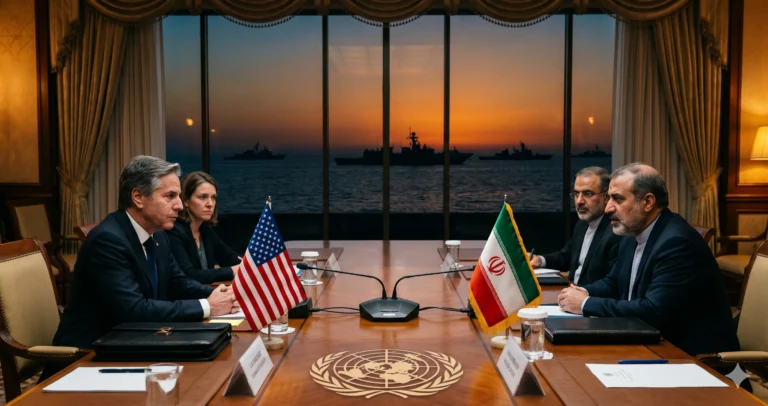
The direct military confrontation between the Islamic Republic of Iran, the United States, and Israel in 2026 represents the most significant shift in the global security architecture since the end of the Cold War. This conflict, which transitioned from a multi-decade “shadow war” into a high-intensity kinetic struggle, is the culmination of nearly half a century of ideological friction, nuclear proliferation concerns, and regional power competition. The escalation that began with the localized exchanges of 2024 and expanded into the devastating “Twelve-Day War” of 2025 has now reached an existential threshold with Operation Epic Fury in early 2026. To understand the trajectory of this war and its eventual conclusion, one must examine the historical genesis of the enmity, the tactical evolutions of the combatants, the domestic pressures facing the Iranian regime, and the structural vulnerabilities of the global energy markets that now dictate the limits of Western intervention.
The Pre-Revolutionary Nexus and the Genesis of Enmity
The contemporary hostility between Tehran and the US-Israel axis is an aberration of history when viewed against the backdrop of the mid-20th century. Under the Pahlavi dynasty, which ruled from 1925 until 1979, Iran was a cornerstone of Western strategy in the Middle East. This alignment was formalized under the “Periphery Doctrine,” an Israeli strategic concept that sought to build alliances with non-Arab states and ethnic minorities on the edges of the Arab world to counter Pan-Arabism and Soviet influence. Iran was the second Muslim-majority nation to recognize Israel in 1948, and by the 1970s, the two nations maintained a de facto embassy in Tehran and exchanged ambassadors.
This relationship was deeply symbiotic. Israel provided Iran with advanced military technology and agricultural expertise, while Iran served as Israel’s primary oil supplier. The two nations even constructed a joint pipeline to transport Iranian oil through Eilat to the Mediterranean for export to European markets. However, this cooperation was often kept “under wraps” to avoid provoking the Arab states, as the Shah balanced his regional interests.
Milestones of the Imperial Era and Early Conflict Triggers
| Year | Event | Strategic Significance |
| 1948 | Israeli Independence | Iran recognizes Israel, establishing the “Periphery Doctrine” foundation. |
| 1951 | Nationalization Crisis | PM Mohammad Mosaddegh severs ties with Israel to gain Arab support and nationalizes Iranian oil. |
| 1953 | Operation Ajax | US and UK-backed coup overthrows Mosaddegh; restores the Shah and cements anti-Western sentiment. |
| 1964 | Exile of Khomeini | Ayatollah Ruhollah Khomeini is exiled for criticizing the Shah’s reform program and dependence on the US. |
| 1970s | Strategic Cooperation | Iran and Israel share extensive military and security cooperation, largely hidden from public view. |
The 1953 coup d’état remains a foundational grievance for the Iranian revolutionary movement. The overthrow of the democratically elected Prime Minister Mohammad Mosaddegh, who had sought to nationalize Iran’s oil and reduce foreign influence, was viewed by many Iranians as a betrayal of sovereignty. The subsequent years of the Shah’s autocracy, characterized by the brutal efficiency of the SAVAK secret police and perceived Western cultural imperialism, created the pressure cooker that exploded in 1978.
The 1979 Rupture and the Export of Revolution
The Islamic Revolution of 1979 was the definitive turning point that redrew the geopolitical map. It was not merely a change in government but a total transformation of the state’s identity and mission. Ayatollah Khomeini introduced a worldview that rejected both the capitalist West and the communist East, instead advocating for a theocratic system based on Velâyat-e Faqih (Guardianship of the Jurist).
Central to the new regime’s legitimacy was its opposition to the “Great Satan” (United States) and the “Little Satan” (Israel). Tehran immediately severed all ties with Israel, handed the Israeli embassy building to the Palestine Liberation Organization (PLO), and cancelled all flight routes. The 444-day seizure of the US Embassy in Tehran starting in November 1979 permanently broke formal diplomatic relations with Washington.
Structural Shifts Following the 1979 Revolution
| Metric | Pre-1979 | Post-1979 |
| Primary Ally | United States | Non-state “Resistance” proxies. |
| Regional Posture | Pro-Western “Policeman of the Gulf” | Revolutionary “Export of the Revolution”. |
| Relationship with Israel | De facto strategic partnership | Existential enmity and delegitimization. |
| Governing Ideology | Secular-Authoritarian Monarchy | Shia Theocratic Republic. |
The revolutionary regime sought to bridge the Arab-Persian and Sunni-Shia divides by adopting a maximalist position on the Palestinian issue, thereby putting US-aligned Arab regimes on the defensive. This led to the formation of the “Axis of Resistance,” a network including Hezbollah in Lebanon, Hamas and Islamic Jihad in Palestine, and eventually the Houthi movement in Yemen and various militias in Iraq and Syria.
The Shadow War Era: 1982 to 2023
For over four decades, the conflict between Iran and the US-Israel axis was defined by its indirect nature. Iran utilized its proxies to bleed its adversaries, while Israel and the US employed cyberwarfare, assassinations of nuclear scientists, and sanctions to contain Iranian influence. The 1982 Israeli invasion of Lebanon provided the IRGC with a critical opportunity to intervene directly by training and arming the fledgling Hezbollah movement, which would become the premier force in Iran’s “Forward Defense” strategy.
During the 1980s, the US and Israel supported Iraq during the Iran-Iraq War to contain the revolutionary threat, though the US also engaged in the illegal Iran-Contra affair. The lessons Iran learned during this brutal eight-year war—particularly its vulnerability to missile attacks and its international isolation—convinced the leadership that it needed a domestic ballistic missile program and a “proxy depth” to deter future invasions.
Key Incidents in the Shadow War
- 1985: Formation of Hezbollah in Lebanon with direct IRGC assistance.
- 2006: Second Lebanon War between Israel and Hezbollah, serving as a test for Iranian-supplied weaponry.
- 2010: Stuxnet cyberattack, a joint US-Israeli operation, targets Iranian centrifuges.
- 2018: US withdrawal from the Joint Comprehensive Plan of Action (JCPOA) and initiation of the “Maximum Pressure” campaign.
- 2020: US assassination of Qasem Soleimani, commander of the Quds Force, in a Baghdad drone strike.
The October 7, 2023, attack by Hamas on Israel acted as the final catalyst for the collapse of this indirect model. While Iran-backed proxies ramped up strikes across the region, including over 200 attacks on US and Israeli targets in Iraq and Syria, the “shadow” began to fade as the direct involvement of the Iranian state became increasingly undeniable.
The Transition to Direct War: 2024 to 2025
The definitive shift to direct state-on-state confrontation occurred in April 2024. After a suspected Israeli air strike on the Iranian consular building in Damascus killed several high-ranking IRGC generals, Tehran launched Operation True Promise, the first direct military assault from Iranian territory against Israel. This operation, involving over 300 drones and missiles, established a new “equation” of deterrence, signaling that Iran would no longer rely solely on proxies to retaliate for attacks on its personnel.
By June 2025, tensions over Iran’s nuclear program reached a breaking point. After the IAEA declared Iran in non-compliance with its safeguards obligations, Israel launched Operation Rising Lion on June 13, 2025, a unilateral strike targeting nuclear and ballistic missile facilities. The US intervened directly on June 21, striking deeply buried sites at Fordow and Natanz that were considered impossible to destroy with Israeli munitions alone.
The Twelve-Day War (June 2025) Outcomes
| Category | Result / Impact |
| Nuclear Infrastructure | Severe damage to enrichment sites in Natanz, Fordow, and Esfahan. |
| Casualties | Hundreds of IRGC personnel and over 30 senior commanders killed. |
| Israeli Civilian Impact | 28 people killed, including children and activists; massive disruption to flights and schools. |
| Strategic Revelation | Iranian missile accuracy found to be lower than feared, termed a “toothless tiger” by some analysts. |
| Diplomatic Result | Failed June 23 ceasefire; Iran immediately begins rebuilding and stockpiling. |
The failed June 2025 ceasefire set the stage for the 2026 escalation. Despite claims by the Trump administration that the strikes had “obliterated” the nuclear program, the regime rapidly dispersed its remaining assets and used the experience to refine its “Mosaic Defense” strategy.
Operation Epic Fury and the 2026 Crisis
The current full-scale war began on February 28, 2026, with the launch of Operation Epic Fury. Unlike the limited objectives of 2025, the 2026 campaign was designed as a regime-change operation. The opening salvos were uniquely devastating, targeting the very heart of the Iranian leadership.
The Decapitation Strike and the Death of Ali Khamenei
On the morning of February 28, joint US-Israeli strikes destroyed several government buildings in Tehran, including the compound of Supreme Leader Ali Khamenei. The assassination of Khamenei, who had ruled for 37 years, created an immediate power vacuum and triggered a torrent of retaliatory fire. Additional strikes on March 3 destroyed the building where the Assembly of Experts was expected to convene, further delaying the formal selection of a successor.
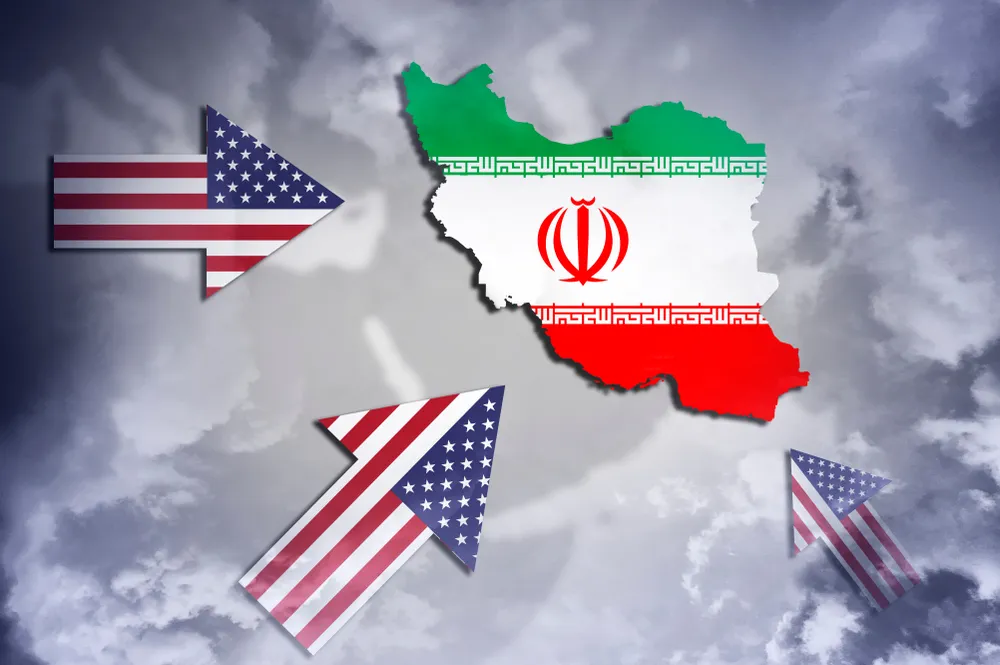
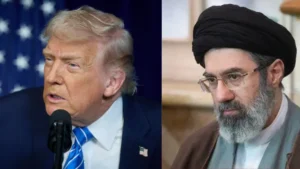
The regime responded by appointing Mojtaba Khamenei, the late leader’s son, as the new Supreme Leader. Mojtaba, a figure with deep ties to the IRGC and the Basij militia, represents a shift toward a more militarized and dynastic form of rule. His first act was to order the continued blockade of the Strait of Hormuz and a missile barrage against US and Israeli targets across the Middle East.
Military and Civilian Toll of the 2026 War (As of March 13)
| Metric | Estimate / Count |
| Iranian Military Personnel Killed | 4,000–5,000 (US/Israeli est.). |
| Civilian Fatalities | Over 2,000 across Iran, Lebanon, and Israel. |
| Displaced Persons | 3.2 million Iranians fleeing urban centers. |
| Naval Losses | Over 50-90 Iranian vessels sunk or damaged. |
| US Service Member Fatalities | At least 8 killed in retaliatory strikes. |
| School Strike (Tehran) | 175 students killed in a reported US strike on an elementary school. |
The scale of the bombardment has been unprecedented. In just the first 100 hours of the US campaign, forces struck nearly 2,000 targets with over 2,000 munitions. The Israeli Air Force conducted over 1,600 sorties in the same period, employing more than 6,000 munitions.
Defensive Doctrines: Mosaic Defense vs. Technological Superiority
The survival of the Iranian state in the face of this onslaught is due to the “Mosaic Defense” doctrine, a decentralized command-and-control system developed after years of studying US military successes in Iraq and Afghanistan. This strategy divides Iran’s defense into 31 regional commands, each with its own intelligence and logistics, ensuring that the neutralization of the leadership in Tehran does not stop the fight.
Components of Iran’s Mosaic Defense
- Asymmetric Attrition: Using $\$20,000$ Shahed drones to force the expenditure of $\$4$ million Patriot interceptors.
- Salami Slicing: Engaging in small-scale, continuous escalations to exhaust the defensive resources and political will of the US and Israel.
- Forward Defense: Activating the remnants of the Axis of Resistance, such as Hezbollah’s Radwan force, to open secondary fronts and stretch Israeli resources.
- Internal Control: Deploying Basij forces on motorcycles to suppress domestic dissent while military units focus on the external threat.
While US Secretary of Defense Pete Hegseth has emphasized the destruction of production facilities, the decentralized nature of these sites makes them difficult to eliminate entirely. Furthermore, Iran’s “cognitive latency”—the retained scientific knowledge—means that the blueprints for its missile and nuclear programs remain intact even if the physical infrastructure is cratered.
Economic Warfare and the Strait of Hormuz Blockade
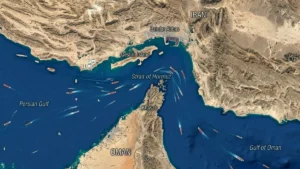
The most significant global consequence of the 2026 war is the effective closure of the Strait of Hormuz. As the passage for $20\%$ of the world’s oil and LNG, the blockade has triggered a global energy crisis comparable to the 1973 oil embargo.
Energy Market Disruptions (March 2026)
| Commodity | Pre-War Price | Peak Price | Impact |
| Brent Crude Oil | ~$70/bbl | $119/bbl | 10-15% jump in US pump prices; global inflation risk. |
| US Gasoline | ~$3.05/gal | over $4.00/gal | Highest levels since late 2023; political pressure on Trump. |
| European Natural Gas | – | 100% Increase | Prices doubled after drone attacks on Qatari gas facilities. |
| Regional Production | – | -6.7M bbl/day | Combined drop from Saudi, Kuwait, Iraq, and UAE. |
In response to the blockade, the IEA ordered the release of 400 million barrels from strategic reserves—the largest in history—but prices have remained above $\$100$ per barrel as Iranian threats to “set ablaze” any vessel in the strait persist. The blockade has stranded hundreds of tankers and forced the grounding of thousands of flights across the Gulf, paralyzing economic hubs like Dubai and Abu Dhabi.
The Internal Crisis: Protests and the Legitimacy Gap
The Iranian regime is fighting a war on two fronts: an external military campaign and an internal popular uprising. In January 2026, security forces killed tens of thousands of protesters in just 48 hours following demonstrations over the failing economy and inflation. These protests were fueled by a “dollar shortage” engineered by the US Treasury to send the Iranian rial into freefall.
The appointment of Mojtaba Khamenei has further alienated the population, as many see it as a transition from a revolutionary republic to a “hereditary monarchy” or military dictatorship. While pro-regime rallies continue, reports of “Death to Mojtaba” chants in Tehran and celebration over Ali Khamenei’s death suggest a deep rift. The regime has intensified political repression, arresting over 21,000 citizens in June 2025 and continuing mass arrests into 2026.
Factors Impacting Regime Stability
- Security Loyalty: Despite the unrest, the security forces have largely remained loyal to the state, viewing the death of the Khamenei family as a personal grievance.
- Economic Pressure: The combination of war costs and a 9.57% single-day stock market crash (KSE 100 index) has pushed the middle class to the brink.
- Succession Crisis: The destruction of the Assembly of Experts building and the loss of senior clerics has weakened the religious legitimacy of the succession.
International Realignment and the Great Power Response
The 2026 conflict has exposed a fragmented international community. On March 11, 2026, the UN Security Council adopted Resolution 2817, condemning Iran’s “egregious attacks” on its neighbors, with 13 votes in favor and two abstentions from Russia and China.
Positions of Major Powers
| Nation | Stance | Support Provided / Actions Taken |
| Russia | Opportunistic Hedging | Intelligence support for drone attacks on US bases; surveillance tech for domestic repression. |
| China | Strategic Caution | Calling for an end to “the law of the jungle”; maintaining record oil imports but avoiding military commitment. |
| Turkey | Pragmatic Mediator | Pushing for an end to fighting while seeking a role in a political solution. |
| Europe | Divided | Some supporting the campaign to weaken Russia’s key drone supplier; others emphasizing de-escalation. |
Russia, in particular, has benefitted from the diversion of Western attention and resources away from Ukraine, though the longer the war continues, the more it risks its relations with Israel and the Gulf states. China remains the most exposed economically but has used the crisis to criticize US “unilateralism”.
Prognosis: How and When the War Will End
The resolution of the Iran-US-Israel war is unlikely to be a clean military victory. Instead, it is trending toward one of several high-risk endgame scenarios. Currently, all parties appear uninterested in a diplomatic solution, with both Washington and Jerusalem insisting on “finishing the job” while Tehran demands reparations and guarantees.
Expert End-Game Scenarios
- The “IRGCistan” Outcome: The clerical regime falls, but the IRGC consolidates power into a military-led state. This entity could be more hardline and dangerous in the short term but might eventually seek an economic deal with the West to stabilize its rule.
- The “Saddam Hussein” Model: The regime survives in a battered and isolated state, maintaining power through extreme domestic violence and remaining a persistent regional threat, similar to Iraq after the 1991 Gulf War.
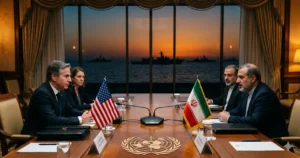
- The Grand Bargain: A 72-hour humanitarian pause brokered by Oman or Switzerland leads to a formalized end to proxy operations in exchange for a US commitment not to pursue regime change.
- Nuclear Deterrence: Driven by the “grievance” of being attacked, Iran successfully tests a nuclear device, fundamentally changing the risk calculus for the US and Israel and forcing a “cold war” stalemate.
Iran’s Conditions for Ending the Conflict (March 11, 2026)
- Recognition of Rights: Acceptance of Iran’s “legitimate rights” as a signatory of the NPT.
- Reparations: Payment for the damage caused by US and Israeli air strikes.
- Guarantees: Firm international assurances against any future aggression.
The conflict is currently in a state of “unconditional surrender” deadlock. The United States and Israel view the current moment as a once-in-a-generation opportunity to eliminate a major source of regional instability. Conversely, the Iranian leadership believes that any concession now would be a death warrant for the Islamic Republic.
Ultimately, the war’s end will likely be dictated by one of two factors: the internal collapse of the Iranian security apparatus under the weight of airstrikes and protests, or the global economic exhaustion caused by triple-digit oil prices and the closure of the Strait of Hormuz. Until the cost of the war outweighs the perceived benefits of victory for both the Trump administration and the Mojtaba Khamenei regime, the Middle East remains locked in a cycle of “eye for eye, tooth for tooth” without compromise. The 47-year arc of the Islamic Republic’s confrontation with the West has reached its most perilous chapter, and the outcome will define the geopolitical landscape of the mid-21st century.