Australia’s federal and state leaders announced plans to review national gun laws after a mass shooting at a Hanukkah festival on Sydney’s Bondi Beach left at least 15 people dead and many more injured, calling the attack an act of antisemitic terrorism.
Deadly attack at Bondi Beach
On Sunday evening, two gunmen opened fire on crowds gathered for a Jewish festival known as “Chanukah by the Sea” near Bondi Beach in Sydney, authorities say. Police say at least 15 people were killed and about 38 others were injured, with victims ranging from children to elderly attendees.
One of the attackers, a 50-year-old father, was shot and killed by police at the scene. His 24-year-old son was taken into custody and remains hospitalized in critical condition. The shooters used legally owned firearms, according to officials.
Police also found improvised explosive devices at or near the scene, which were safely neutralized by bomb squads.
Government response and gun law review
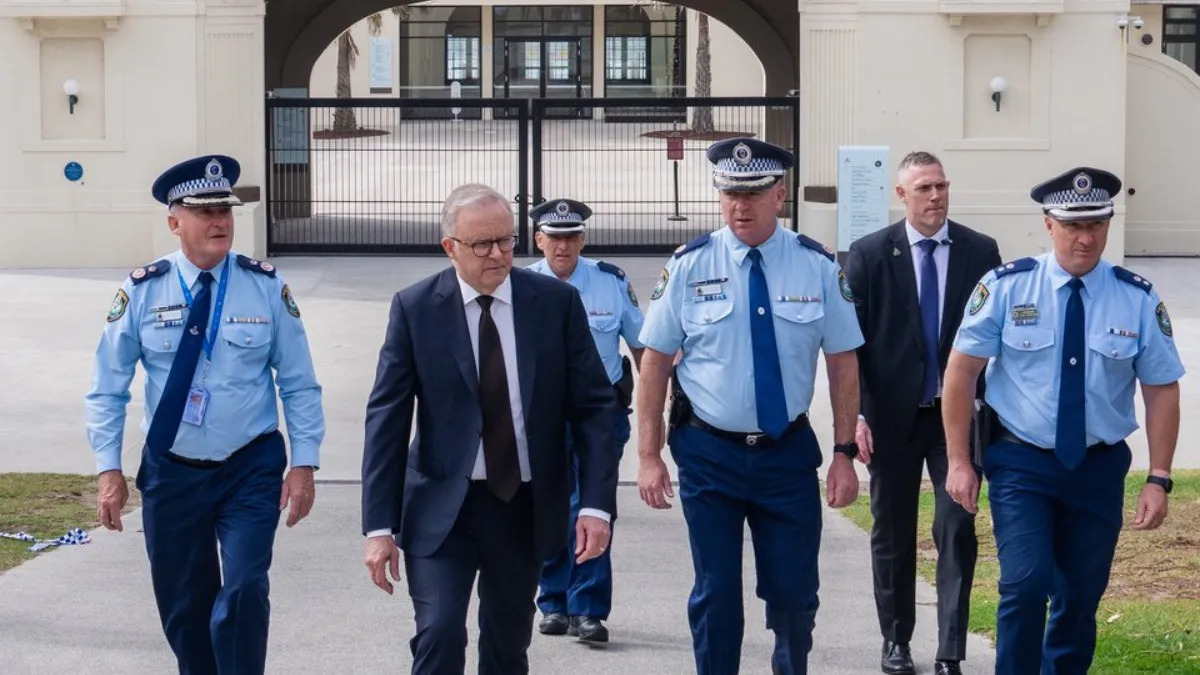
Prime Minister Anthony Albanese described the attack as an “act of pure evil” and a targeted act of terrorism against the Jewish community. In response, he pledged a broad review of Australia’s gun laws to identify gaps in the regulatory system that allowed legally owned weapons to be used in the massacre.
This review may include reassessing how firearm licenses are issued and monitored, and possibly imposing tighter limits on access to high-powered weapons not justified by agricultural or sporting needs, officials say. New South Wales Premier Chris Minns has also urged reforms, arguing current laws were insufficient to prevent the attack.
Australia already has some of the strictest gun control laws in the world, enacted after the 1996 Port Arthur massacre that killed 35 people. Those reforms led to tight controls on semi-automatic and automatic weapons and a national buyback program. But critics of the current system say the Bondi attack shows weaknesses remain.
Impact on Jewish and broader communities
Jewish leaders and community members mourned the victims and called for increased protections against antisemitism and violence. The attack struck at a significant holiday celebration, intensifying grief and outrage. Officials at community events in Sydney and beyond have urged unity and stronger action to protect minority groups.
Other political figures have also weighed in. Opposition leaders and commentators criticised the government’s handling of firearm regulations and intelligence assessments leading up to the attack, citing concerns about rising antisemitic incidents and gaps in monitoring potentially dangerous individuals.
Why it matters
Mass shootings are rare in Australia, particularly since the 1996 gun reforms that drastically reduced firearm violence. The Bondi Beach attack is the deadliest in nearly three decades, prompting national reflection on whether current firearm laws are sufficient in an era of evolving threats. The government’s review could lead to tighter licensing, better tracking of gun ownership, and even changes in how states and territories coordinate on firearm policy, a shift that would be significant for Australia’s longstanding approach to gun control.
What to watch next
• Gun law review outcomes: Details of the proposed reforms, including any changes to licensing, weapon categories, and gun owner monitoring.
• Legislative action: Whether federal or state parliaments adopt new laws following the review.
• Investigation findings: Results of the probe into the shooters’ motives, links to extremist groups, and any intelligence failures.
• Community security measures: Plans to enhance safety at festivals, religious events, and public gatherings, especially for minority communities.