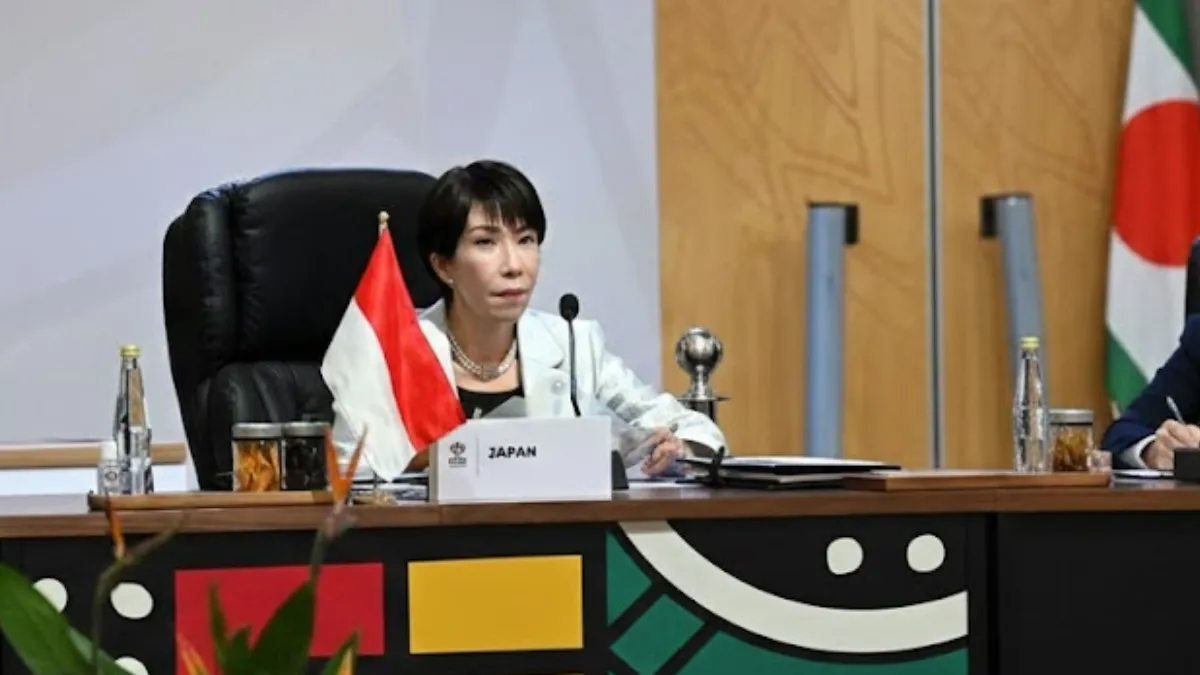
China has once again called on Japanese Prime Minister Sanae Takaichi to retract controversial remarks about Taiwan that Beijing says violate the one-China principle and risk destabilizing regional security, deepening a diplomatic rift between the two Asian powers.
What China is demanding
At a regular press briefing, Chinese Foreign Ministry spokesperson Guo Jiakun reiterated that Japan should formally retract Takaichi’s earlier comments suggesting that a hypothetical Chinese attack on Taiwan could constitute a “survival-threatening situation” for Japan and possibly justify military action. China accuses the remarks of interfering in its internal affairs and challenging the core of its sovereignty claims.
Beijing frames the demand as grounded in established political documents, including the 1972 Sino-Japanese Joint Communiqué, and insists that Japan must uphold commitments it made under those agreements. Chinese diplomatic messaging connects the controversy to broader concerns about historical militarism and post-war order. reports Chinese Foreign Affairs Ministry.
Tokyo refuses to back down
Takaichi and her government have repeatedly rejected China’s demand to retract the remarks. In statements to Japanese media, she says that Japan’s overall stance on Taiwan has not changed and that her comments were consistent with longstanding policy. Tokyo has argued that clarifying security scenarios does not equate to hostility toward China.
This refusal to retract has been echoed domestically by supporters who see the comments as legitimate considerations of national security, even as opponents call for greater caution and diplomatic sensitivity.
Domestic and international fallout
Within Japan, political parties, scholars and protesters have urged Takaichi to take back her remarks to prevent further diplomatic fallout. Demonstrations in Tokyo included calls for explanation, apology and even resignation, reflecting unease among sections of the public and opposition leaders about the potential repercussions of the comments.
Internationally, the dispute has been spotlighted at forums such as the United Nations, where Chinese envoys urged retraction and reflection to preserve peace and regional stability. Analysts note that the controversy comes against a backdrop of increasing China–Japan tensions that have also seen economic and cultural exchanges disrupted.
Why it matters
Taiwan is one of the most sensitive geopolitical flashpoints in the Indo-Pacific. Japan’s postwar diplomacy has traditionally avoided explicit military commitments regarding Taiwan. Takaichi’s remarks, interpreted by Beijing as a shift toward linking Taiwan security with Japanese defense obligations — risk undermining decades of bilateral diplomatic frameworks.
China’s persistent demand for retraction underscores its insistence on the one-China principle, while Tokyo’s refusal reflects a potential recalibration of regional security discourse in an era of rising tensions. Experts caution that without de-escalation, the dispute could have wider implications for Northeast Asian stability.
What to watch next
- Further diplomatic engagement: Whether high-level talks or back-channel negotiations ease tensions.
- International positions: How major powers, including the U.S. and regional organizations, respond publicly to the row.
- Economic impact: Consequences for tourism, trade, and cultural exchanges between China and Japan.
- Domestic politics in Japan: Internal pressure on Takaichi and parliamentary debates over foreign policy.