Nvidia’s Move to Smartphone-Style Memory Could Reshape the Server Market — and Double DRAM Prices
Nvidia is reengineering its next wave of AI servers to run on LPDDR, the same low-power DRAM used in smartphones. Industry analysts say this change could ignite one of the most consequential supply shifts in recent memory, with server-grade DRAM prices potentially doubling by the end of 2026. Accuracy-focused reports from multiple research firms, including Counterpoint Research, say the trend is already visible in forward-pricing models.
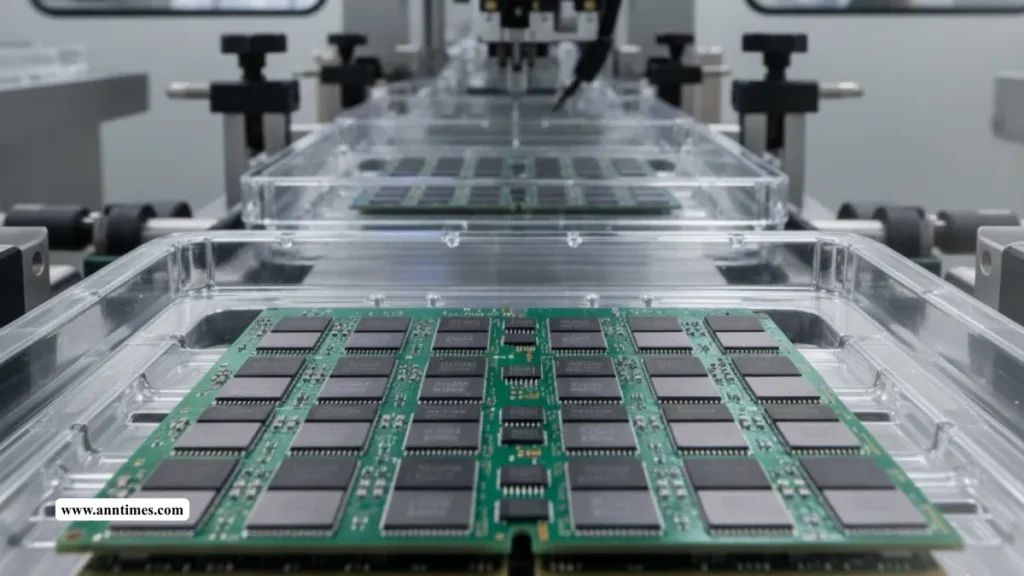
Why the pivot? LPDDR offers better energy efficiency — a major factor given the massive power demands of today’s AI supercomputers. Nvidia’s enterprise customers have been pushing for lower-power systems as electricity costs surge worldwide. LPDDR also provides high bandwidth, which is increasingly important for GPU-driven workloads.
But this shift comes with consequences. LPDDR is produced in far smaller volumes compared to DDR5, and most of that capacity is already locked into smartphone and mobile-device contracts. Analysts in New York and Seoul say Nvidia’s sudden demand spike could force chipmakers like Samsung, SK Hynix, and Micron into a historic reallocation of manufacturing lines — at the expense of other DRAM products.
.webp)
Counterpoint Research warns that each AI server can consume “equivalent LPDDR volume to more than 20 smartphones.” Put bluntly: the math doesn’t add up without major investment. Memory suppliers are cautious, noting that fabs require long lead times for retooling and billions in capital. If demand rises faster than capacity expands — and every model shows that it will — server-memory prices could climb dramatically.
Higher costs will inevitably reach cloud providers and enterprise buyers. Industry analysts say hyperscalers like AWS, Google Cloud, and Microsoft Azure may be forced to raise prices or throttle the pace of AI cluster scaling. The shift also risks knock-on effects for consumer DRAM markets as manufacturers juggle limited wafer starts.
.webp)
For Nvidia, the gamble is strategic: more efficient systems, lower thermal loads, and tighter integration between processors and memory. But for the rest of the market, the adjustment period will be painful — and expensive. By late 2026, the AI boom may collide with a genuine memory bottleneck.