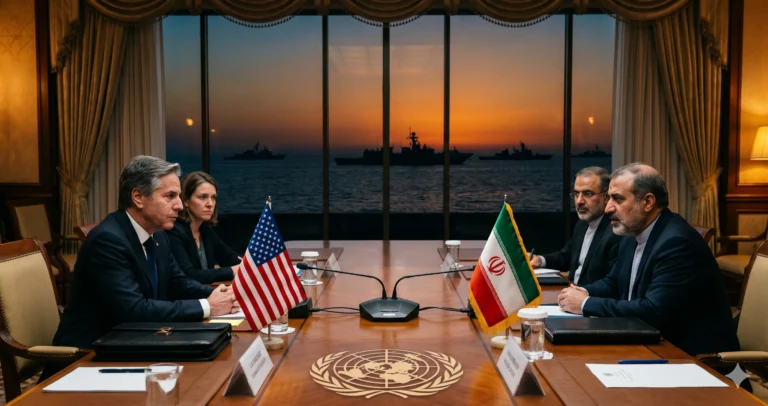
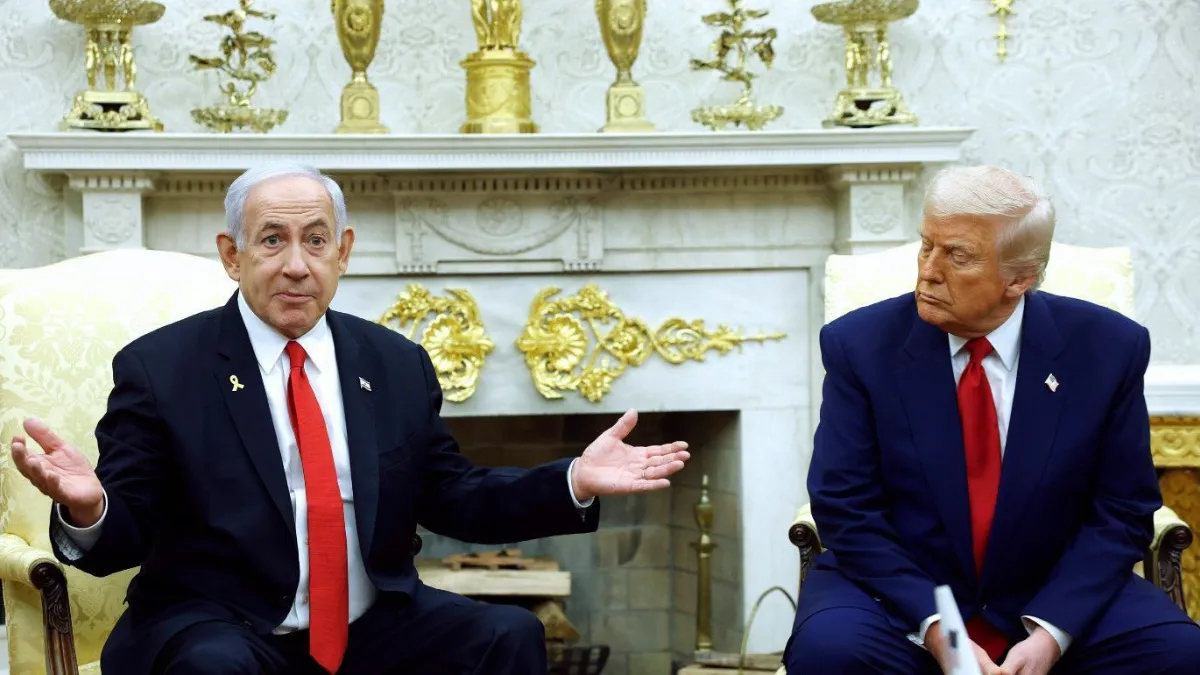
As the confrontation between Iran, Israel, and the United States intensifies, a striking feature of official messaging has emerged: the growing portrayal of the conflict as a struggle with deep religious undertones.
The US Israel religious war framing Iran conflict narrative has become increasingly visible in speeches, media statements, and diplomatic messaging, where leaders describe the confrontation not only as a strategic or security challenge but also as an ideological struggle rooted in identity, values, and religious legitimacy.
This rhetorical shift has major implications. Framing a geopolitical conflict in religious language can mobilize domestic support, rally allies, and delegitimize adversaries – but it also risks inflaming sectarian tensions across the Middle East.
Political Messaging and Strategic Framing
In many of their statements, Israeli officials emphasize that Iran’s leadership defines itself through a revolutionary Islamic ideology that openly calls for Israel’s destruction. Iran’s Supreme Leader Ayatollah Ali Khamenei has repeatedly described Israel as an illegitimate state and supported militant groups opposing it.
By highlighting those statements, Israeli leaders portray the conflict as more than a territorial dispute or security rivalry. Instead, they frame it as a confrontation between democratic states and a religiously driven regime.
Israeli Prime Minister Benjamin Netanyahu has frequently described Iran’s government as a “radical Islamist regime,” arguing that its ideology motivates regional aggression and nuclear ambitions.
The United States, while generally using more diplomatic language, often echoes the ideological framing by describing Iran’s leadership as extremist and destabilizing.
Iran’s Own Religious Narrative
The religious framing does not originate solely from Israel or the United States.
Iran’s political system itself blends religion and governance under the doctrine of Velayat-e Faqih – rule by Islamic jurists. This doctrine places the Supreme Leader at the center of both political authority and religious legitimacy.
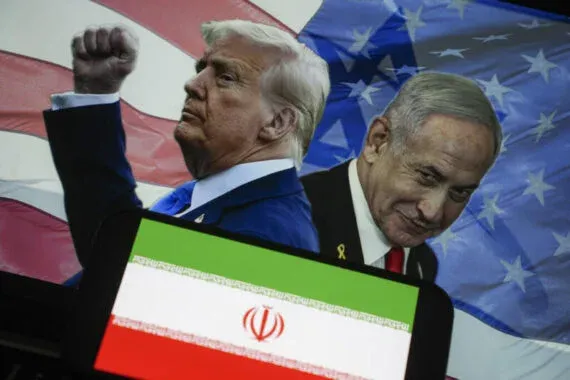
Iranian leaders often describe their regional policies as part of a broader “axis of resistance” against Western influence and Israeli power. In speeches, officials portray the struggle as one involving religious duty, anti-imperialism, and defense of Muslim lands.
In other words, both sides employ ideological narratives – though with different goals.
Mobilizing Domestic and International Support
Political scientists say religious language can serve a strategic purpose during crises.
By presenting the conflict in moral or religious terms, leaders can simplify complex geopolitical disputes and rally public support.
For Israel, framing the conflict as a battle against religious extremism reinforces alliances with Western governments and highlights shared democratic values.
For Iran, portraying the struggle as resistance against Western and Israeli oppression strengthens support among sympathetic groups across the Middle East.
The Risk of Escalation
However, analysts warn that religious framing can also deepen divisions.
When conflicts are portrayed as existential or sacred struggles, compromise becomes politically harder. Religious narratives can also resonate beyond national borders, potentially drawing in militant groups or sectarian actors.
Historically, conflicts in the Middle East that acquire religious overtones often become more difficult to resolve.
What the Framing Means for the Future
The current narrative surrounding the Iran-Israel confrontation shows how modern conflicts often blend geopolitics, ideology, and identity.
While the core issues remain strategic – nuclear capabilities, regional power, and security – the religious framing shapes how the conflict is perceived by global audiences.
If the rhetoric intensifies further, analysts warn the conflict could increasingly be seen not just as a regional power struggle but as a civilizational confrontation.
Whether that perception reflects reality or political messaging may ultimately determine how the crisis evolves.
Five Most Load-Bearing Claims:
- Israel and US messaging increasingly frames the Iran conflict as ideological and religious in nature.
- Iran’s political system integrates religion with governance through the doctrine of Velayat-e Faqih.
- Iranian leaders frequently use religious and ideological rhetoric to describe their confrontation with Israel and the West.
- Political leaders use religious framing to mobilize domestic and international support.
- Religious narratives in geopolitical conflicts can increase the risk of escalation and reduce prospects for compromise.