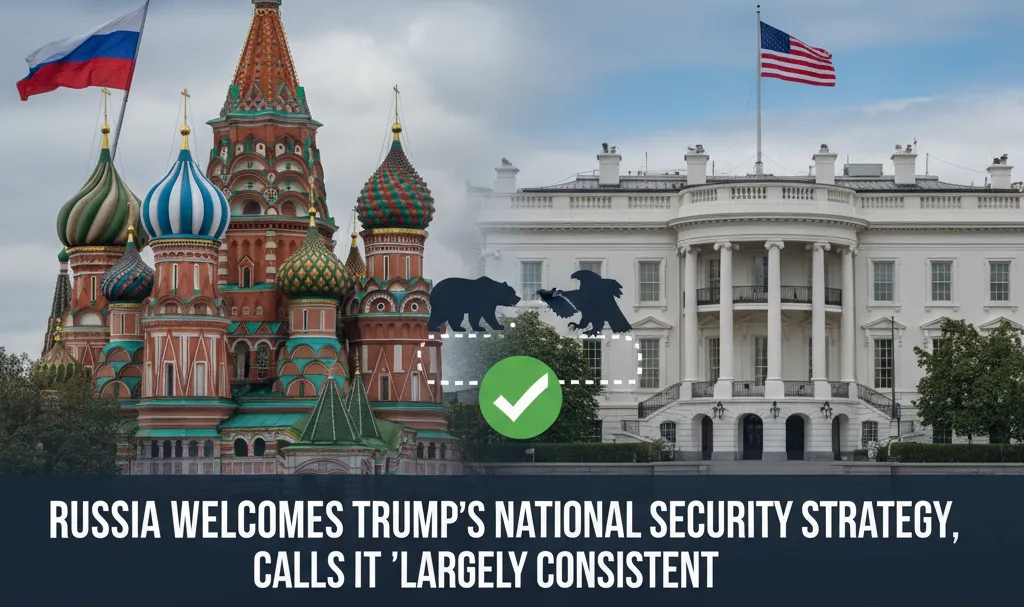
Russia has expressed a positive reception to the recently released United States National Security Strategy, describing it as largely aligned with Moscow’s perspectives.
The 33-page report, unveiled by the US administration this week, outlines priorities including combating foreign influence, curbing mass migration, and addressing perceived European censorship practices. Notably, the strategy does not classify Russia as a direct threat to the United States, a shift that has caught the attention of European officials.
Kremlin spokesperson Dmitry Peskov, speaking to Russia’s Tass news agency, stated, “The adjustments we are observing in the strategy are generally consistent with our vision. We view this as a constructive step, though further analysis is needed before drawing definitive conclusions.”
European Reaction and Concerns
Several EU representatives and analysts have raised questions about the strategy, particularly its emphasis on freedom of expression and its resemblance to language commonly used by Moscow. EU officials expressed concern that the document’s tone could soften the US stance towards Russia, potentially affecting ongoing efforts to bring peace to Ukraine.
The strategy also critiques the European Union for limiting US influence on the continent and suggests that Washington should work to “re-establish strategic stability with Russia” as a means to strengthen European economies.
In addition, the report emphasizes the promotion of “Western identity” and warns that Europe could face significant cultural and economic challenges over the next two decades. It also encourages support for patriotic European political parties, highlighting America’s interest in their revival.
US and NATO Relations
While the document signals shifts in rhetoric towards Russia, European leaders continue to reaffirm their commitment to the US as a key NATO ally. German Foreign Minister Johann Wadephul commented, “The US remains our most important partner in the alliance, which focuses on security matters. Matters concerning freedom of expression or internal governance are not the core purpose of this strategy.”
Polish Prime Minister Donald Tusk also addressed the US publicly via social media, stressing that “Europe is your closest ally, not your problem,” and called for shared focus on mutual security threats.
Former Swedish Prime Minister Carl Bildt weighed in on the report, suggesting that its language reflects positions further to the right than mainstream European policy, while noting the US’s increasing engagement with Germany’s far-right AfD party.
Global Security and Defense Focus
The US strategy includes plans to target illegal drug trafficking routes in the Caribbean and eastern Pacific, as well as preparing for potential military action in Venezuela. It also emphasizes increased defense spending commitments from Japan, South Korea, Australia, and Taiwan.
In the US, some Democratic lawmakers have criticized the strategy, warning it could damage long-standing foreign relations. Representative Jason Crow from Colorado labeled it “catastrophic to America’s global standing,” while Representative Gregory Meeks of New York expressed concern that it “abandons decades of values-driven US leadership.”
Conclusion
The release of the new National Security Strategy marks a notable shift in US foreign policy, particularly in its approach to Russia and Europe. While Moscow has welcomed the report, European reactions remain cautious, reflecting the complex dynamics of international security and alliances. As discussions and analyses continue, the strategy’s long-term impact on global diplomacy and regional stability will become clearer in the coming months.