ZURICH — Thousands of people took to the streets of Zurich on January 19 to protest against Donald Trump and the World Economic Forum, as global political and business leaders gathered in Davos for the annual meeting. Swiss police said clashes broke out during the demonstration, leading officers to use water cannon and tear gas to disperse crowds after property was damaged.
The protest unfolded as part of a long-running tradition of demonstrations in Switzerland that coincide with the start of the World Economic Forum, which critics accuse of amplifying inequality, corporate influence and elite decision-making behind closed doors. This year’s march was also heavily focused on opposition to Trump, whose return to the international stage has drawn sharp criticism from left-wing groups and activists across Europe.
Police response and damage
Zurich police said the demonstration began peacefully but later turned confrontational when some protesters vandalised property, including shop windows and street infrastructure. Officers responded by deploying water cannon and tear gas to prevent further damage and to push demonstrators away from sensitive areas in the city centre.
Authorities did not immediately report serious injuries, but said several people were detained for questioning. Police also stressed that security had been heightened in Zurich and Davos to prevent unrest from spreading closer to the summit venue.
Anti-Trump, Anti-WEF Protests Shake Zurich Ahead of Davos Talks #anntimes #news #Davos #Zurich https://t.co/49KmzHdE4x pic.twitter.com/yX07X4fRgi
— ANN Times (@the_anntimes) January 20, 2026
Focus on Trump and global elites
Many demonstrators carried placards denouncing Trump’s policies on trade, climate change and migration, while others criticised what they see as the outsized influence of wealthy nations and corporations represented at the World Economic Forum. Chants and banners accused global leaders of prioritising profits over social justice, climate action and workers’ rights.
The protests came as Trump’s recent policy moves, including threats of new tariffs on European countries and confrontations over issues such as Greenland, have fuelled tensions between Washington and several European capitals.
Davos under heavy security
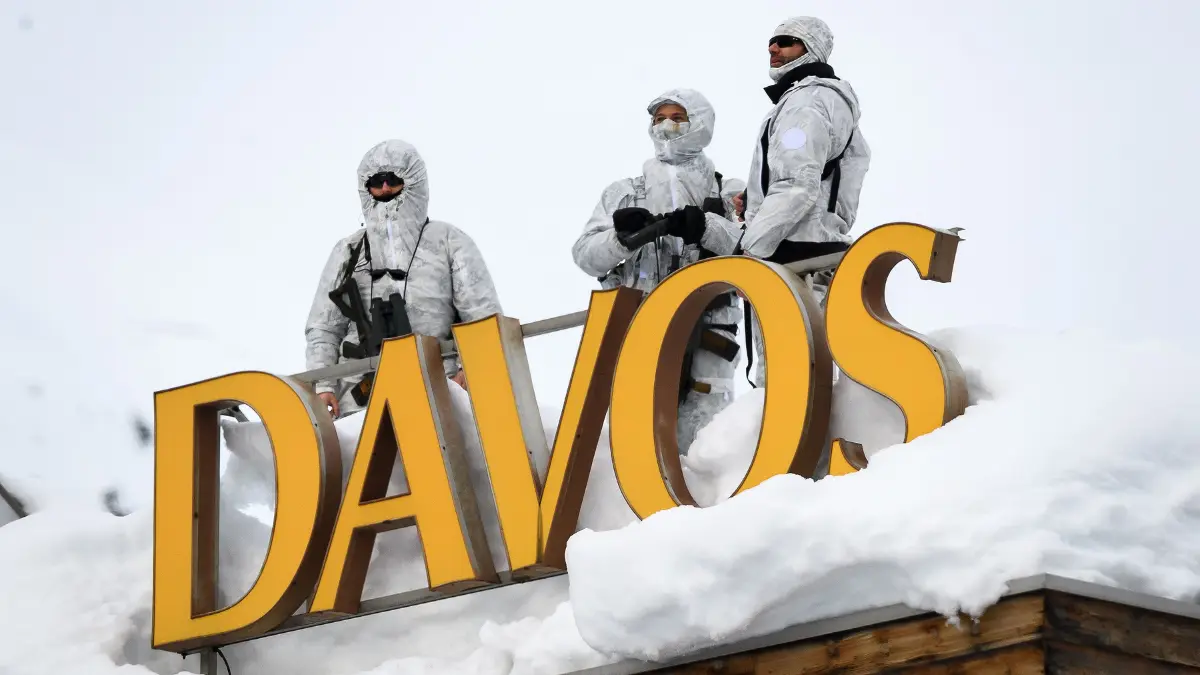
In Davos itself, Swiss authorities enforced tight security measures, including road closures, military patrols and airspace restrictions, to protect delegates attending the forum. Organisers said discussions at this year’s meeting would focus on geopolitical instability, economic fragmentation and climate risks, even as protesters outside Switzerland’s alpine resort argued the forum symbolises global inequality.
Demonstrations against the WEF have taken place for decades, often centred in Zurich, about 150 kilometres from Davos, where larger crowds can gather more easily than in the small mountain town.
Why this matters
• The protests highlight persistent public anger over globalisation and elite power.
• Trump’s presence in global debates continues to polarise opinion well beyond the United States.
• Security concerns around Davos remain high amid rising geopolitical tensions worldwide.
• The clashes underscore the gap between summit agendas and grassroots dissent.
What to watch next
• Whether further protests occur during the Davos meeting.
• Possible legal action against those accused of property damage.
• Responses from WEF organisers and political leaders to the demonstrations.
• Broader public reaction across Europe to Trump’s policies and rhetoric.